A visit to the 7th Kyoto Crafts Artists Exhibition, and a gallery talk we won’t forget
Introduction
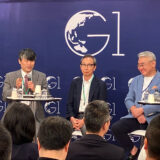
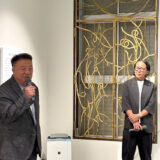
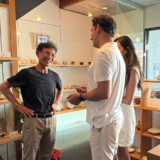
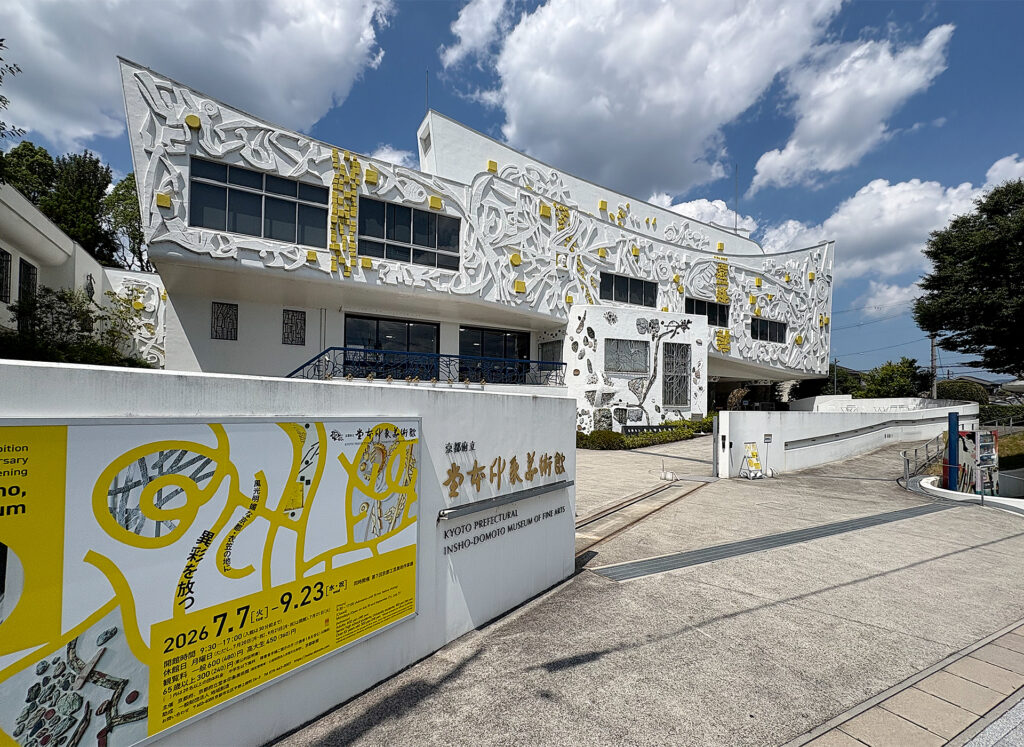
We’d originally been invited to the preview event for the 7th Kyoto Crafts Artists Exhibition, at the Kyoto Prefectural Insho-Domoto Museum of Fine Arts. My schedule didn’t cooperate that day, though, so the preview came and went without me. But when I looked at the calendar again, I noticed the exhibition’s gallery talk fell on my regular day off — and that two of our own artists, Masamasa Imai (ceramics) and Issay Hattori (lacquer), would be speaking together that day. That settled it. Three of our artists had work in this exhibition, and hearing Imai-san and Hattori-san talk about their craft, in their own words, was really the whole reason I made the trip.
Conversations from the Gallery
Imai-san opened the talk, and Hattori-san picked up the thread not long after — and from there, the two of them settled into something closer to a real back-and-forth than a formal Q&A. That’s the part I loved most: at some point they stopped addressing the audience and just started talking to each other, the way two craftspeople do when they finally get a rare chance to compare notes.
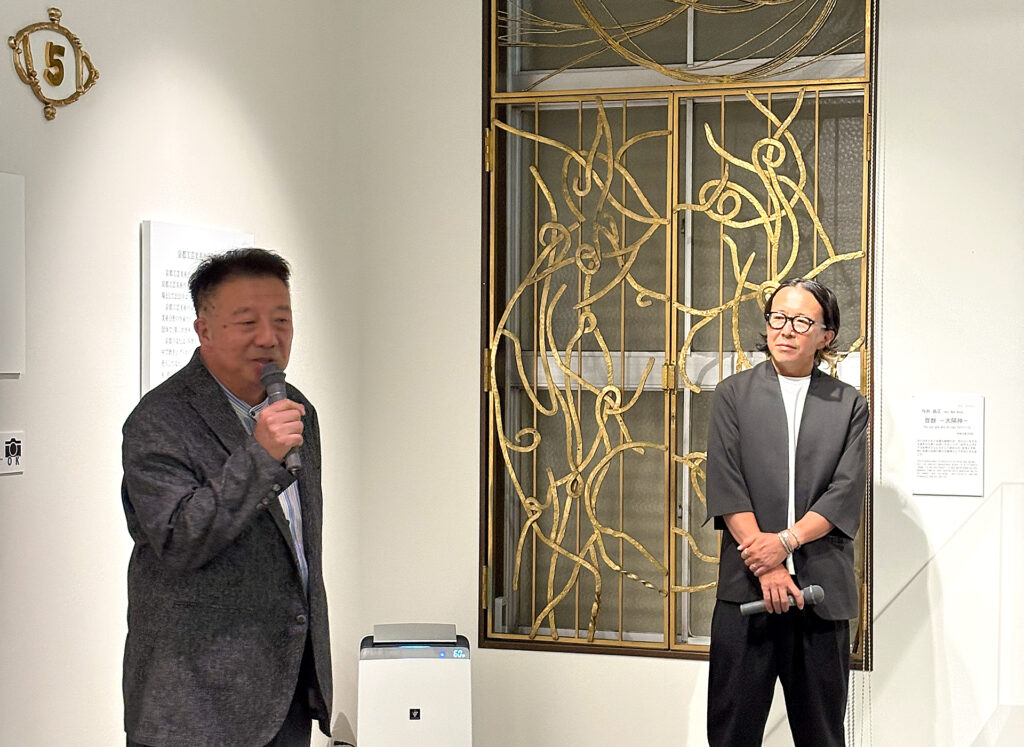
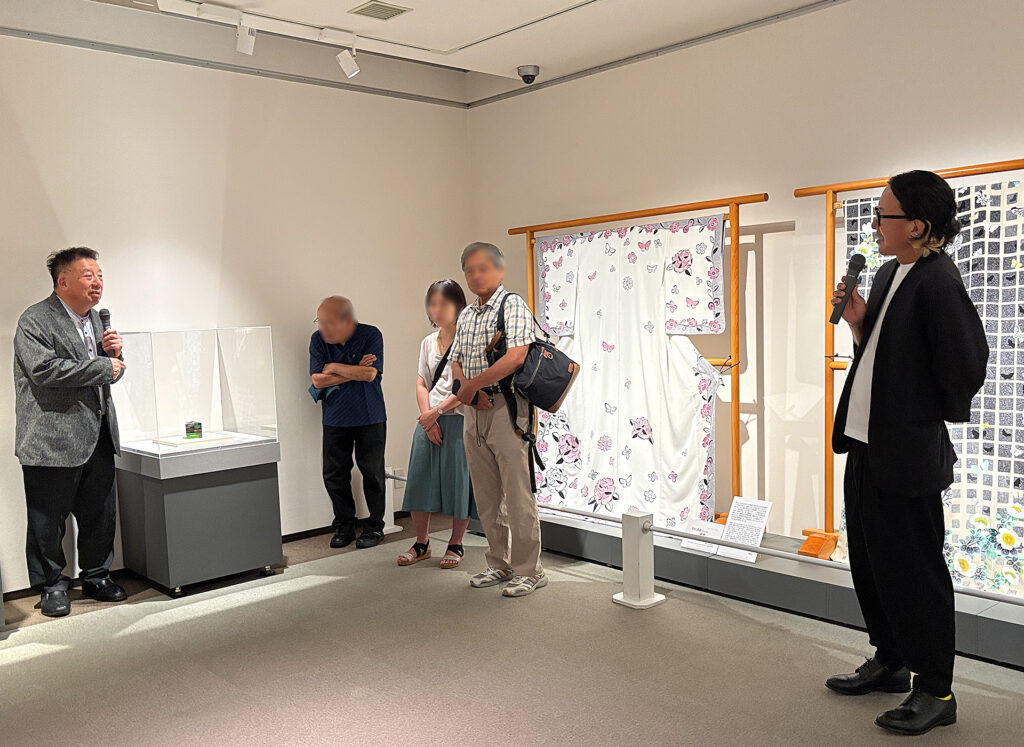
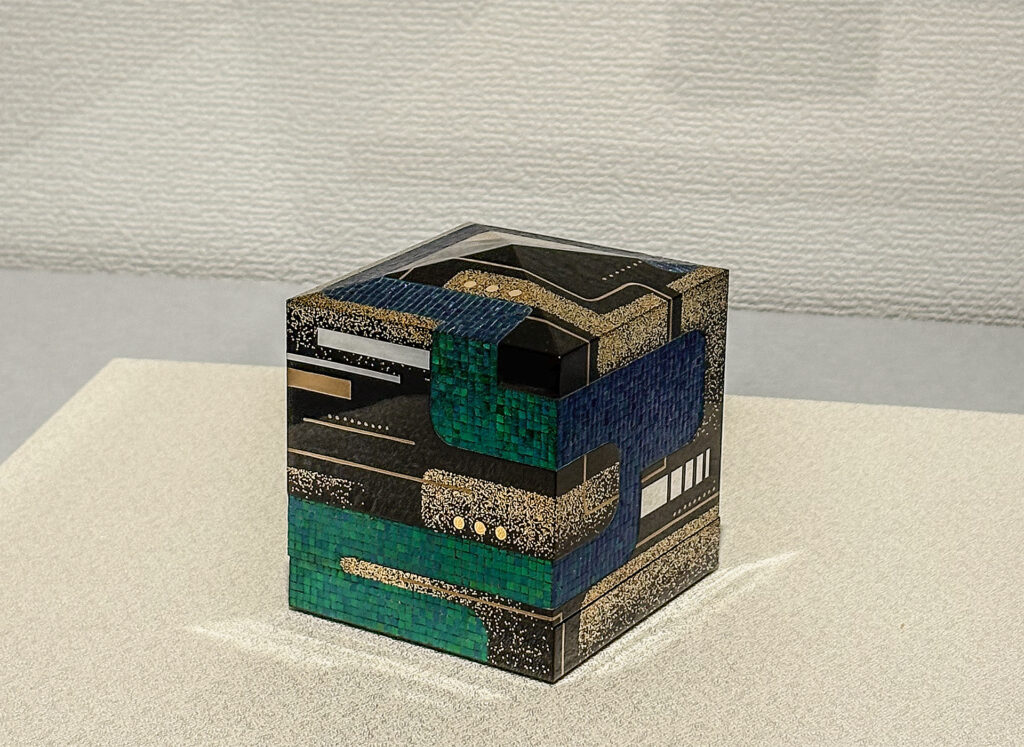
Hattori-san was refreshingly direct about the difficulties of his craft right now. Lacquer needs humidity to cure properly, he explained — it’s part of why the technique has always suited Japan’s climate so well. But with the weather behaving less predictably than it used to, controlling that curing process has become a genuine, ongoing struggle. Materials are a headache too, for a different reason: gold prices have climbed sharply, making it a genuinely expensive material to build a piece around, and things like the iridescent wings of jewel beetles, used in certain inlay work, are hard to source at all these days. And yet, he said, gold simply isn’t a material lacquer art can do without — so however much prices rise, it isn’t something he’s willing to skimp on. He said it plainly, almost matter-of-factly, but you could feel it was a point of real pride for him.
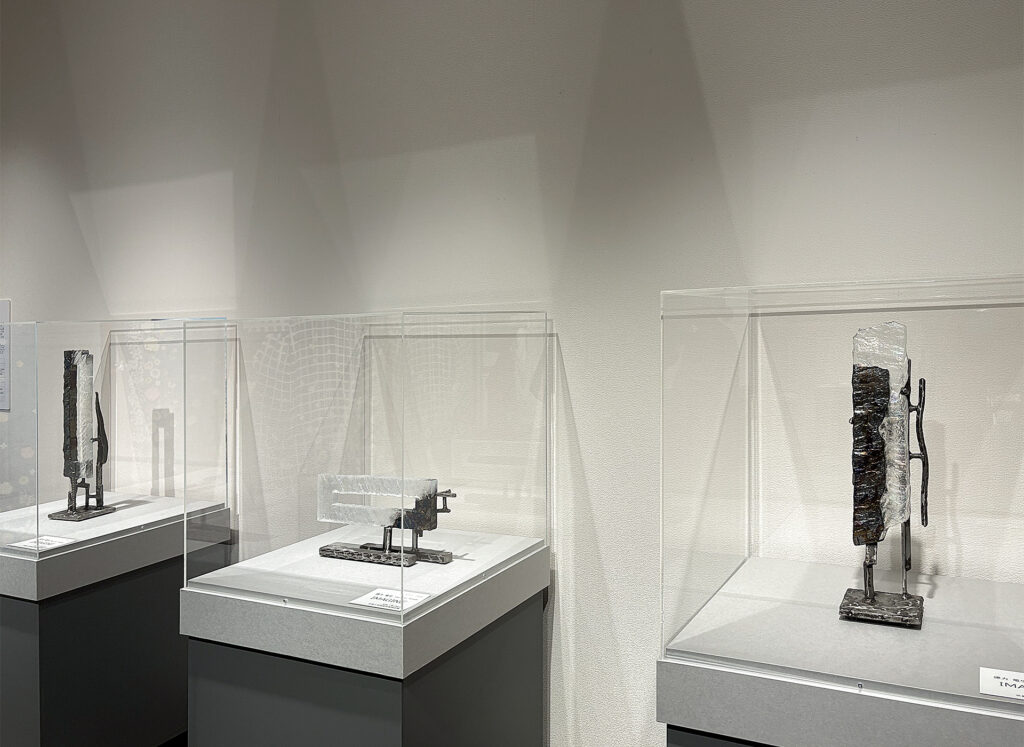
Imai-san took this and ran with it. “Ceramics and lacquer have completely different busy seasons,” he said, “because what the clay needs from the air is more or less the opposite of what the lacquer needs.” Where Hattori-san is managing humidity, Imai-san is usually working around dryness and firing temperature. He then turned to a nearby piece by glass artist Tokuriki, also showing in this exhibition, and described the relationship between glass and ceramics as “close but far, and far but close” — both born of fire, both shaped in a kiln, and yet needing entirely different temperatures to come alive. It was a lovely, precise way of putting it, and one that stuck with me long after the talk ended.
The Lost Flames, and a Familiar Auspicious Animal
One of the stories Imai-san told during the talk has stayed with me since.
He explained that he still insists on firing his work in a climbing kiln (noborigama) in Takehara, in Hiroshima Prefecture — no small commitment, given how far that is from his studio here in Kyoto. He gave us some background on why. Kyoto itself used to have a number of shared climbing kilns, particularly around the old Kiyomizu-zaka area, where potters and craftspeople of all kinds would gather around the same fire. These days, city ordinances mean that firing mostly happens individually now, each potter with their own electric or gas kiln.
Imai-san wasn’t romanticizing the past or lamenting the present here — he told it more as an interesting example of how the times have changed, and he was quick to note that both approaches have their own real advantages: a wood-fired climbing kiln offers something an electric or gas kiln can’t quite replicate, but electric and gas kilns bring a level of control and convenience that the old communal kilns never could. It was less “the good old days” and more “here’s how a craft adapts as its city changes around it.”
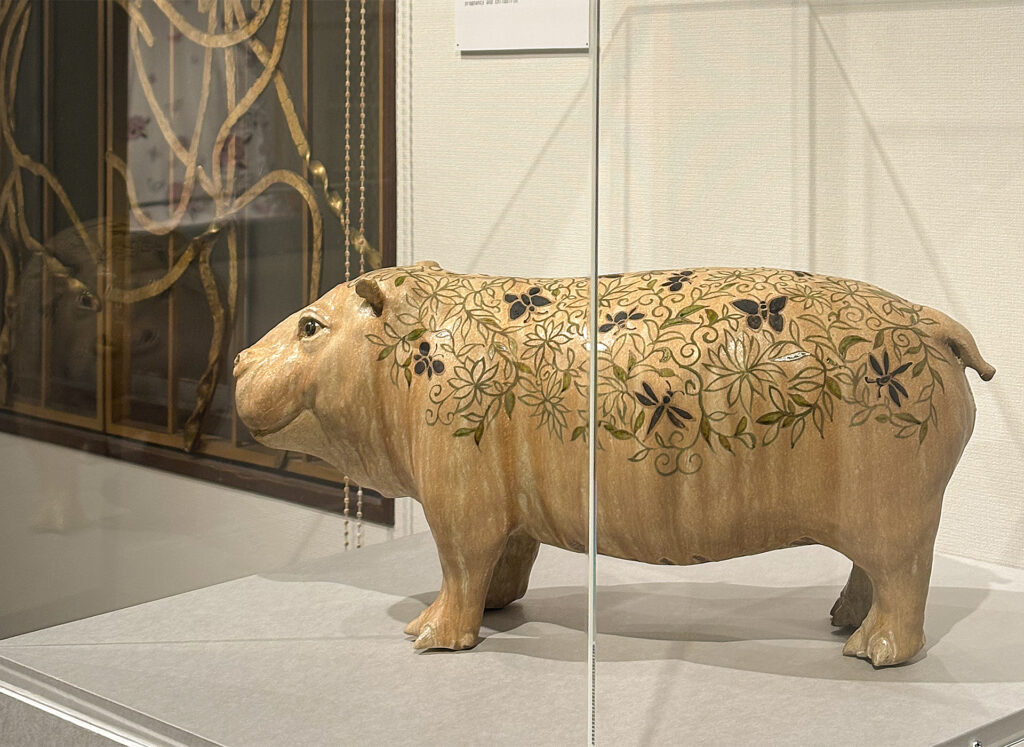
“Kissho” — auspiciousness, good fortune — is a theme Imai-san returns to often in his animal ceramics, and this exhibition was no exception. One of the pieces on display was his ceramic hippopotamus, titled 豊獣 -太陽神- (“Sun God”). During the talk, Imai-san mentioned, almost as an aside, that in some parts of the world the hippopotamus is actually regarded as a lucky, auspicious animal. The room laughed, clearly charmed — it isn’t the animal most of us would think to reach for first when picturing “good fortune,” which is exactly why the remark landed so well.
Conclusion & An Invitation to Kyoto
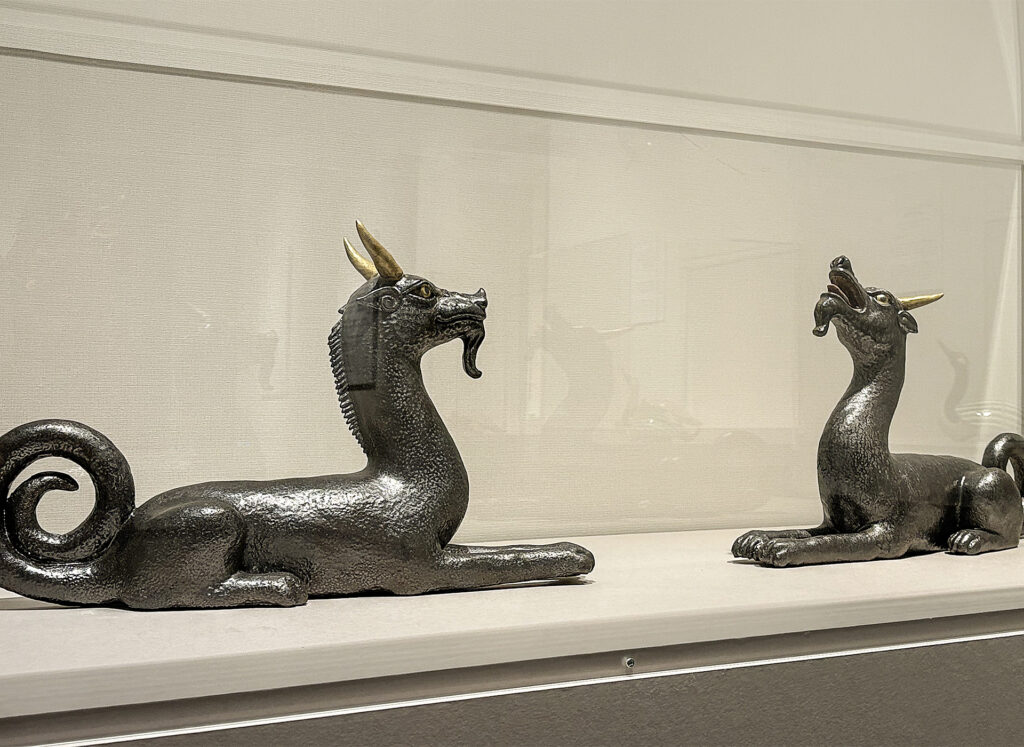
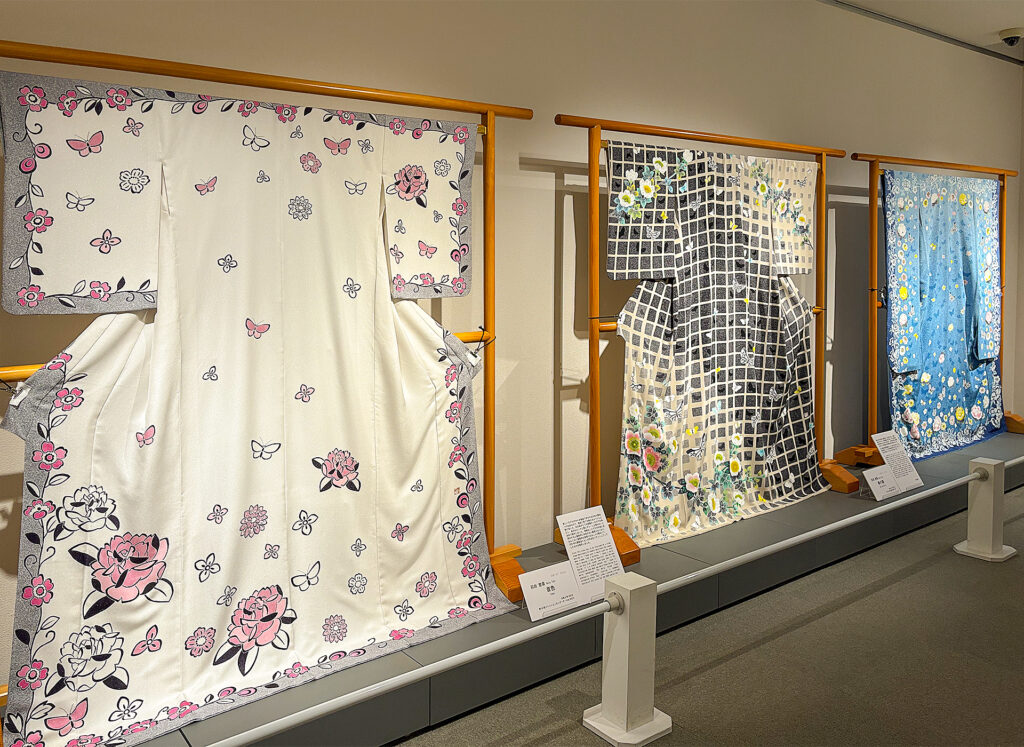
Once the talk wrapped up, I finally had the chance to slow down and look properly. The exhibition was arranged in two rooms: the first held Imai-san’s ceramic works, including the hippo and the other animal pieces built around this recurring kissho theme. The second room brought together Toki Hata’s kimono, Issay Hattori’s lacquer, and glass work by Mr.Tokuriki, all side by side.
Standing in front of Ms.Hata‘s three kimonos, I understood immediately why photographs never quite capture yuzen dyeing. One piece has butterflies and peonies drifting across an ivory ground. Another moves through a beautiful gradation from deep indigo into a vivid, luminous blue. And the third — the one we’re fortunate enough to carry on our own site — is titled “Music of Spring” (春の譜), rendering the natural beauty of spring through the traditional Rinpa style, its crisp black lattice holding wildflowers in place with real precision. You need to stand close to see how the color truly lives inside the silk rather than sitting on top of it, and this room let me do exactly that.
Right alongside them sat Hattori-san’s lacquer boxes — the same pieces whose materials and rising costs he’d just spent the afternoon describing to us. Seeing them up close after hearing what goes into them gave the work a different weight entirely.
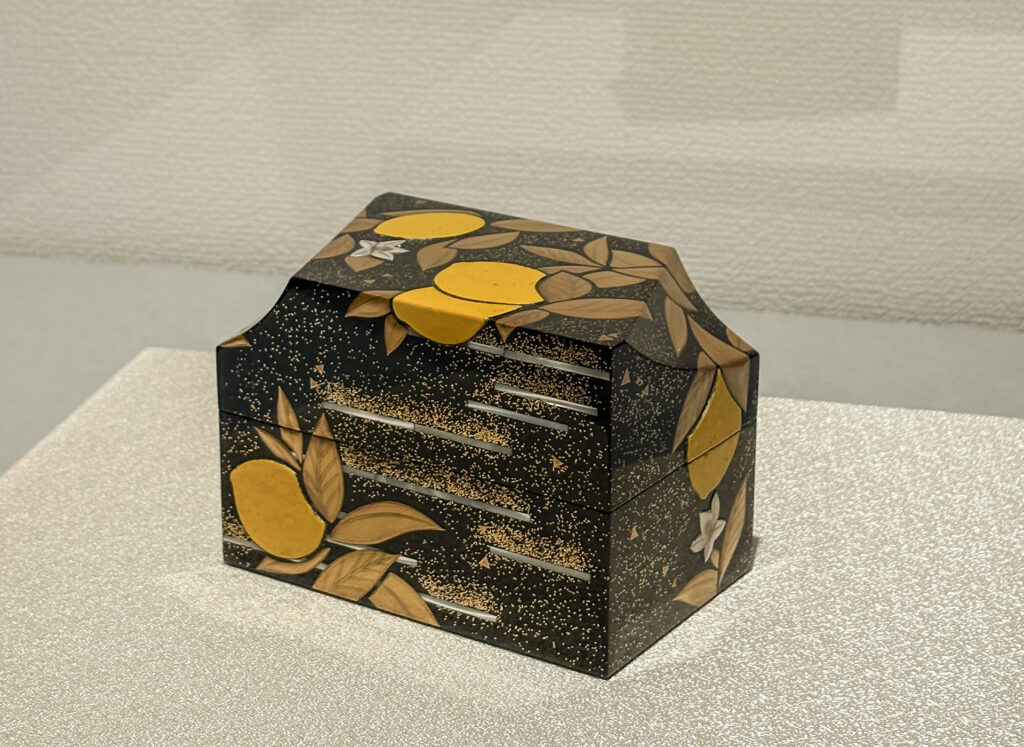
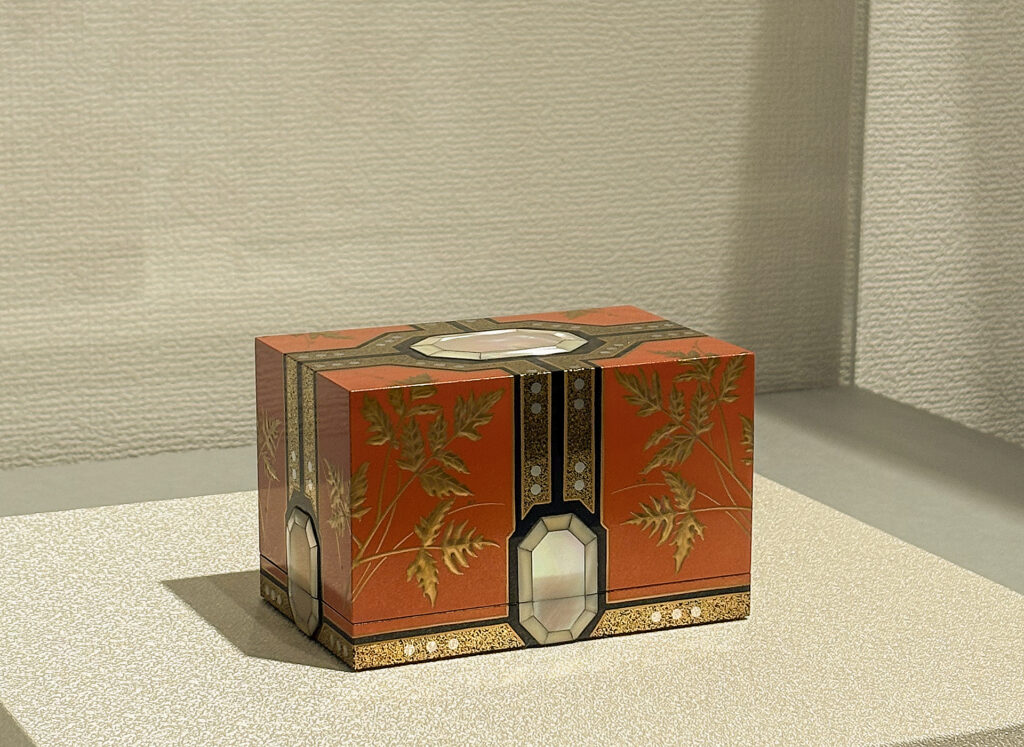
Here’s what I came away with, more than anything else: none of these pieces really live in a glass case. That’s just where they happen to be resting for a season. They live in a kiln in Takehara that still smells of smoke. They live in Hattori-san’s workshop, in the particular humidity he’s learned to read like weather. And they live in conversations exactly like the one I was lucky enough to sit in on that afternoon.
So here is our real invitation. If you ever find yourself in Kyoto, please come find our small gallery. It’s genuinely small — we’re a team of four, and we like it that way — but it means you’ll get to hold these pieces, look closely at the yuzen brushwork, turn a lacquer box over in your hands, in a way a glass case simply won’t allow.
And looking further ahead, this is something we’re quietly building toward: private visits to the artists’ own workshops, so that one day you could stand where I stood, breathe in the smoke of a climbing kiln or the particular smell of curing lacquer, and maybe even meet the people behind the work yourself.