On September 12, 2026, I had the honor of joining a panel discussion at the 4th G1 Kansai in Kyoto, an invitation-only leadership forum, in a session titled “Kyoto’s Culture, Cuisine, and Craft — Weaving Honmamono Across the Ages.”
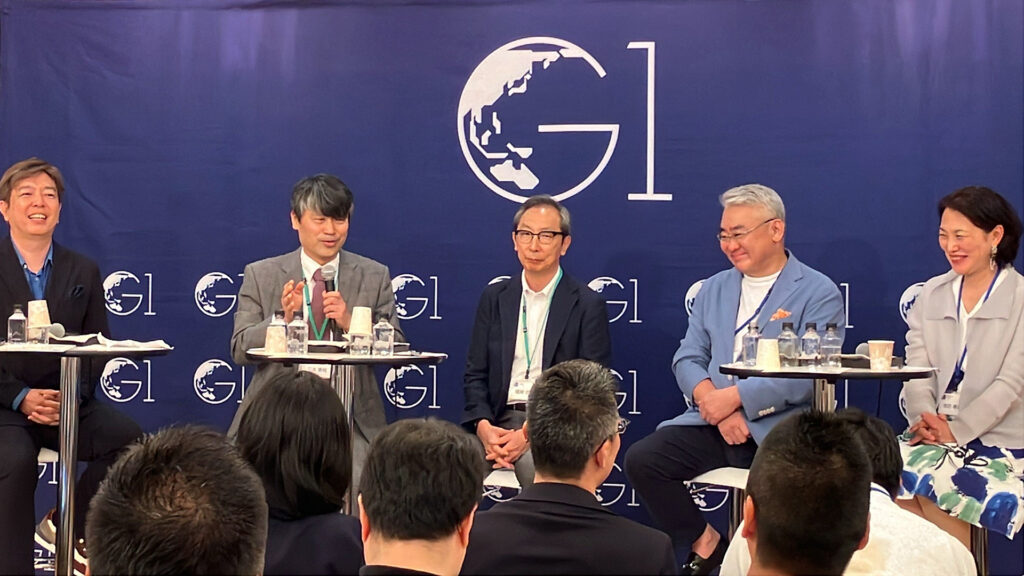
Sharing the stage were Senko Ikenobo (Iemoto-designate of Ikenobo, the head school of ikebana), Kunio Tokuoka (President and Head Chef of Kyoto Kitcho), and Hyoetsu Miki (lacquer artisan of Shikkogei Hyoetsu), with Koichi Takeuchi (Representative of IKM LLC; Specially Appointed Professor at Kyoto University of Advanced Science) moderating. To sit among practitioners who have each carried their respective crafts — flower, food, and lacquer — with such depth and conviction was, for me, a rare privilege and a genuine education.
The discussion centered on a question that has occupied me since I first began Kogei Art KYOTO: what does it mean to protect honmamono — the “real thing,” the genuine article, refined over a thousand years of Kyoto tradition — while still having the courage to let it change? Kyoto’s culture has never survived by standing still. Ikebana, kaiseki cuisine, and lacquerware have each been reshaped, generation after generation, by artisans willing to meet their era honestly rather than retreat into nostalgia. That, I came to understand more clearly through this conversation, is the true meaning of continuity.
For our part at Kogei Art KYOTO, this raises a very concrete question: how do we carry work born of Kyoto’s centuries-old ateliers to collectors who have never set foot in this city, without diluting what makes it honmamono in the first place? It is a question we try to answer daily — through the words we choose, the images we share, and the relationships we build with each artist we represent — but hearing it framed by leaders in ikebana and cuisine reminded me how much further there is to go, and how shared this responsibility is across every field rooted in Kyoto craft.
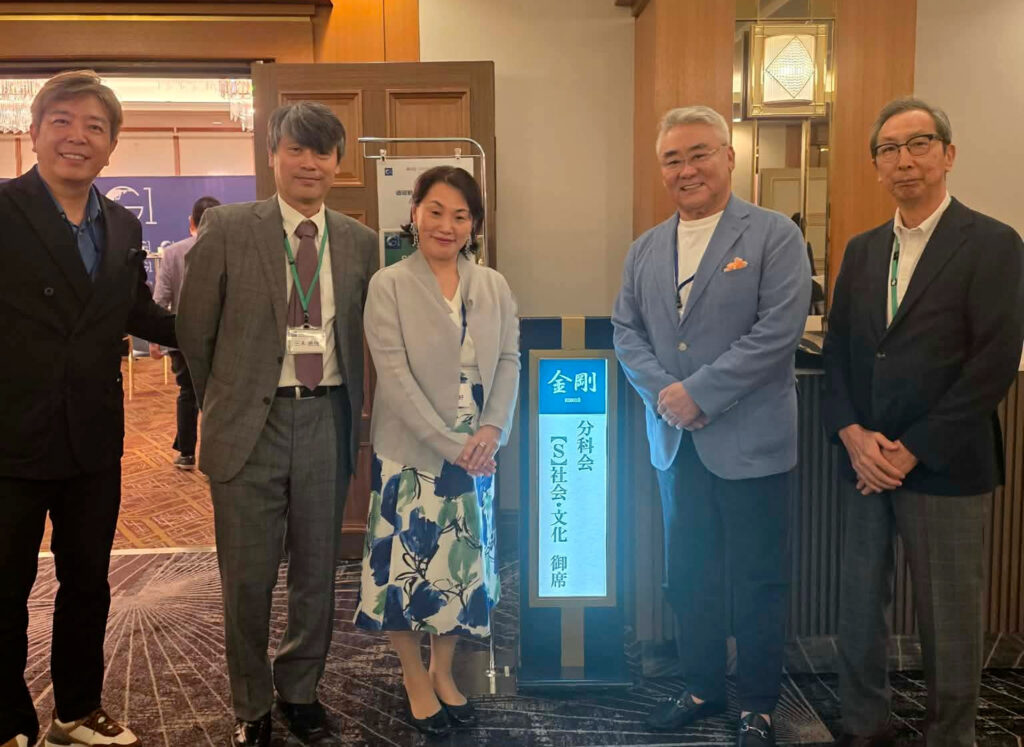
I am deeply grateful to Ms. Ikenobo, Mr. Tokuoka, and Mr. Miki for the candor and generosity with which they spoke, and to Mr. Takeuchi for guiding a conversation that left all of us, I believe, with more questions than answers — the good kind.
I am also mindful that our family’s company, founded in 1921 as a printing house in this same city, has for over a century carried Kyoto’s culture into print and, later, into new forms of media. That history feels, more than ever, like a quiet mandate.
Kogei Art KYOTO exists to carry Kyoto’s honmamono forward — faithfully, and without fear of the new. This conversation only deepened that resolve.