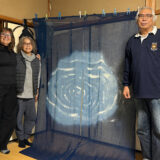
In September, a message arrived through our contact form. It came from Argentina, from an artist named Marita Manzotti, and it was not an ordinary inquiry.
Marita is a psychotherapist and photographer. She was working on an installation called Las huellas del silencio, “Traces of Silence,” dedicated to her mother, who passed away during the pandemic. She imagined layering photography, perforated paper, and sheer, naturally indigo-dyed fabric to give form to what remains when words run out. She was looking for someone in Japan who could help her dye that cloth.
We introduced her to Yoko Kamitani, a traditional indigo artist in Otsu, Shiga Prefecture, who works with natural fermented indigo, or hon-aizome. In October, Marita crossed the world to meet her.
Choosing the Cloth in Kyoto
On October 21, we gathered at Tanaka Nao Dyeing Shop in Kyoto. Shelves of undyed rolls rose to the ceiling, and indigo-dyed samples hung on the walls like a preview of what was to come.
Marita and Yoko lifted bolt after bolt into the light, testing how each fabric fell and how much light passed through. She wanted cloth sheer enough to let silence and light pass through it.

Sketching, Stitching, Preparing
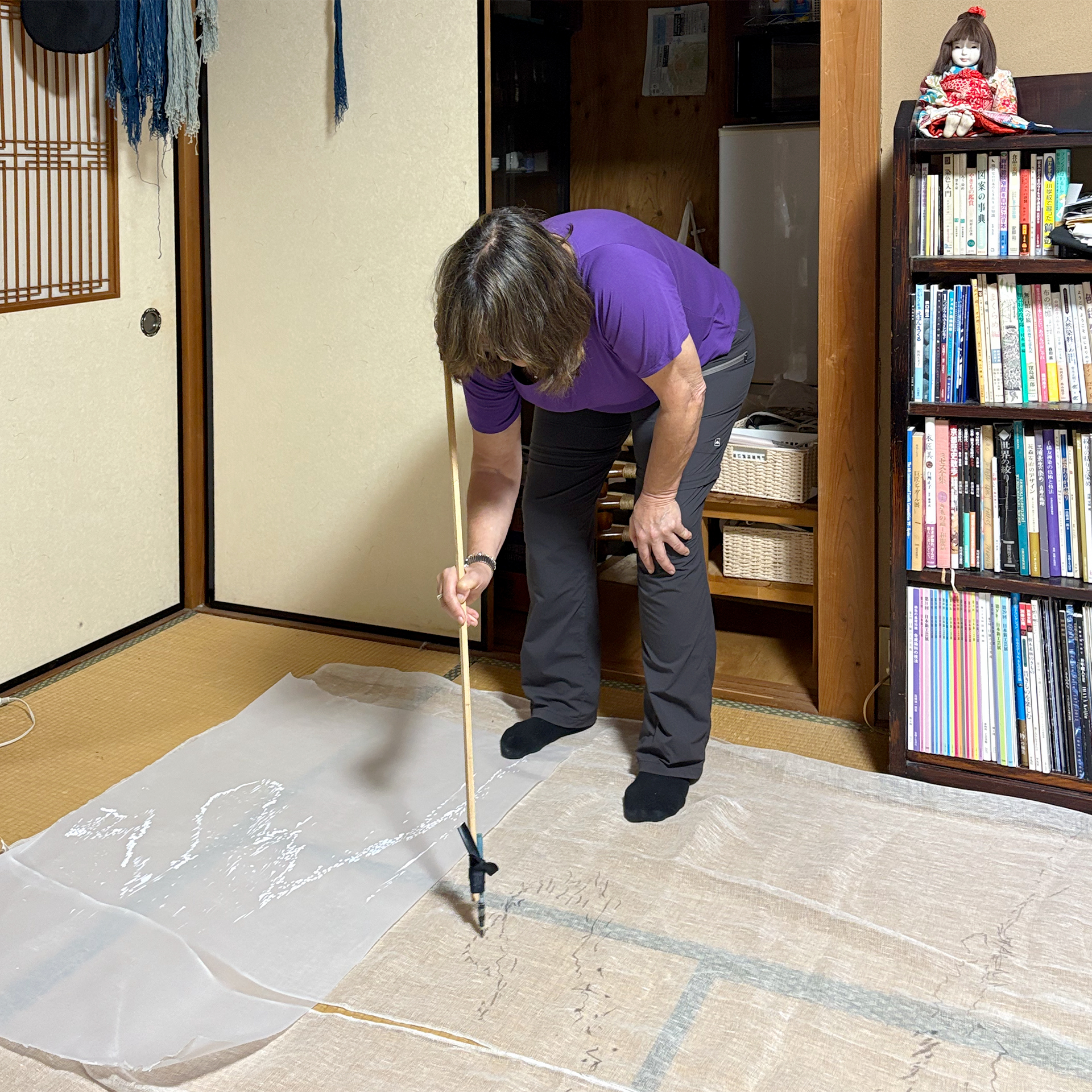
Four days of work followed at Yoko’s studio in Otsu, from October 25 to 28. They began on the tatami floor. Marita bent over the fabric with a long-handled brush and drew an image sketch directly on the cloth. It was more than a pattern: she imagined the finished work and checked where each indigo motif would fall. She moved across the cloth as if walking through a landscape.
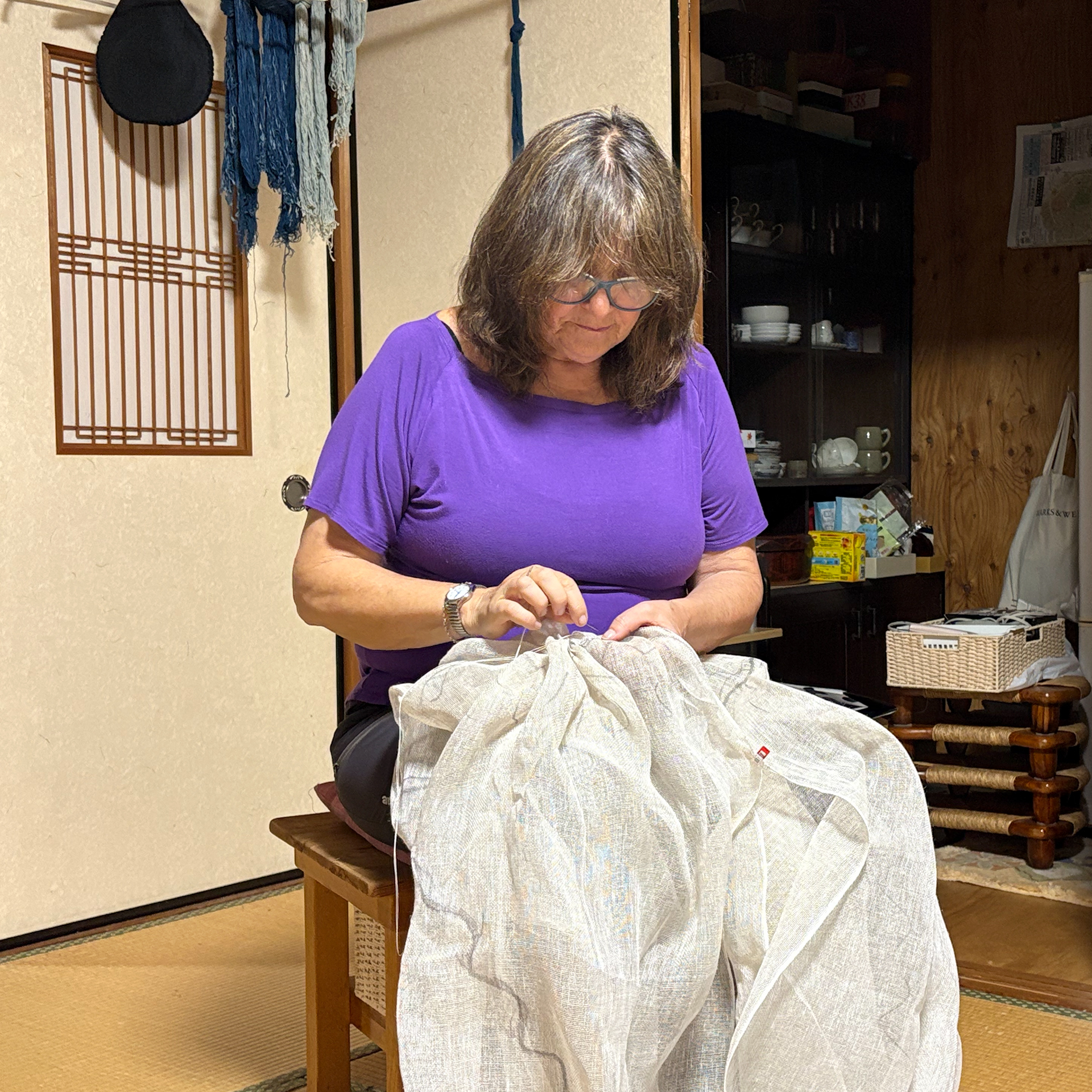
Then came the patient part. In the evening lamplight, Marita gathered and hand-stitched the fabric for shibori, the tie-resist technique in which every stitch decides where the indigo will not reach. Nothing could be hurried.
The Magic of Hon-aizome
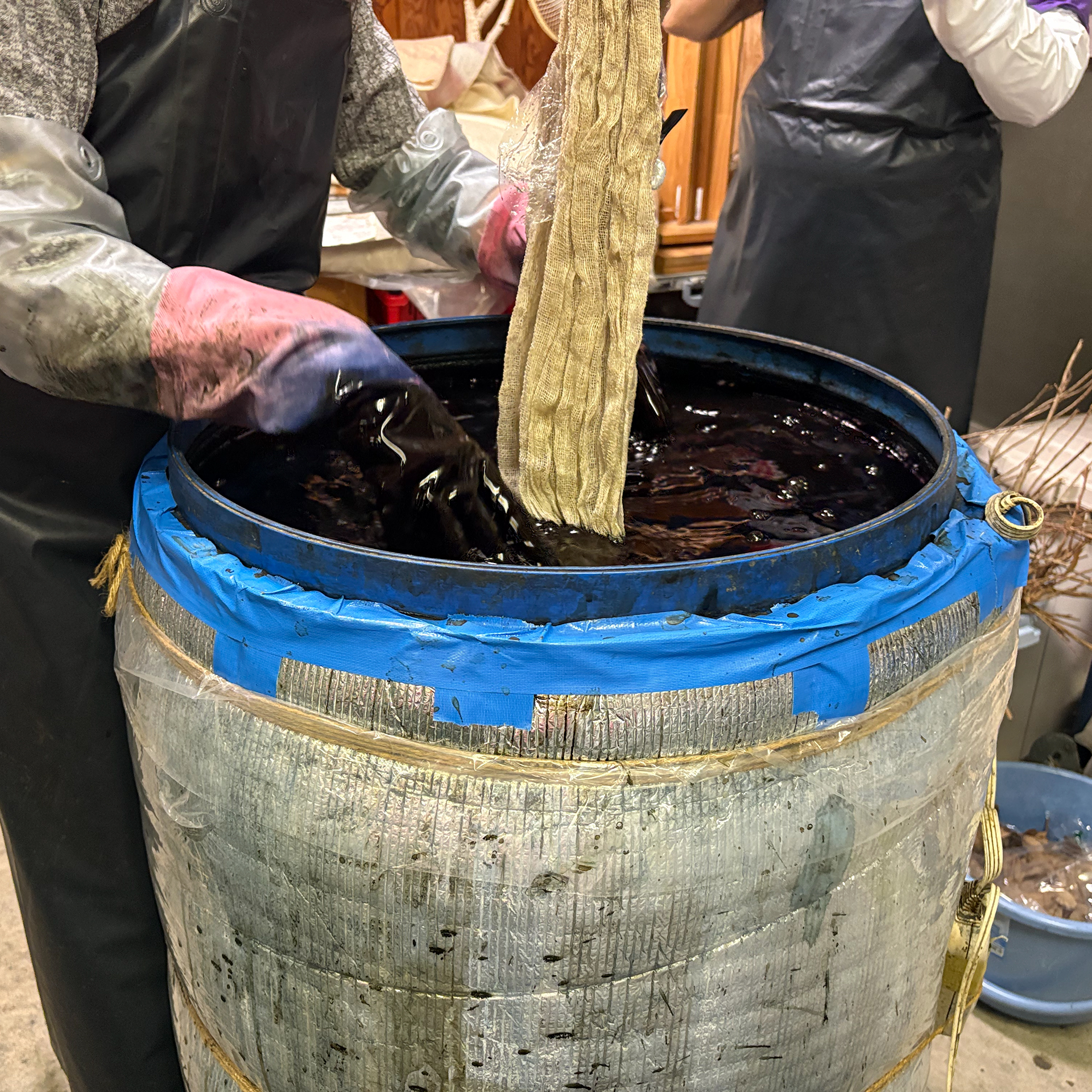
Natural indigo is alive. It ferments in the vat, and its mood shifts with the weather, the temperature, and the day. No one can promise exactly what the cloth will become.
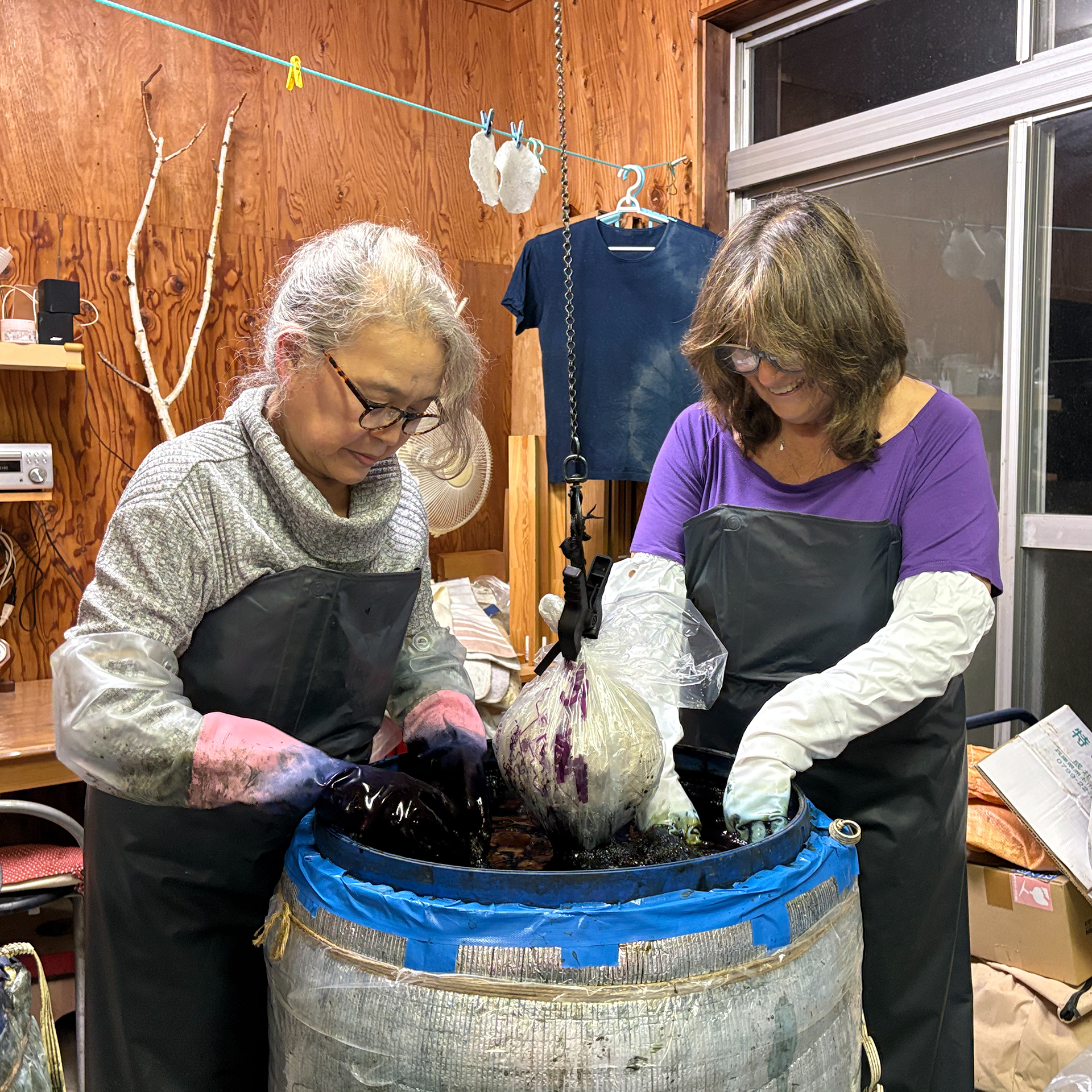
Marita did not resist that. She embraced it, because the theme of her work was already about traces left by nature and by silence, things that cannot be fully controlled. Side by side, Yoko and Marita lowered the bundled cloth into the dark vat, lifted it into the air, and watched it turn from green to blue as it met the oxygen.
Silence Captured in Indigo
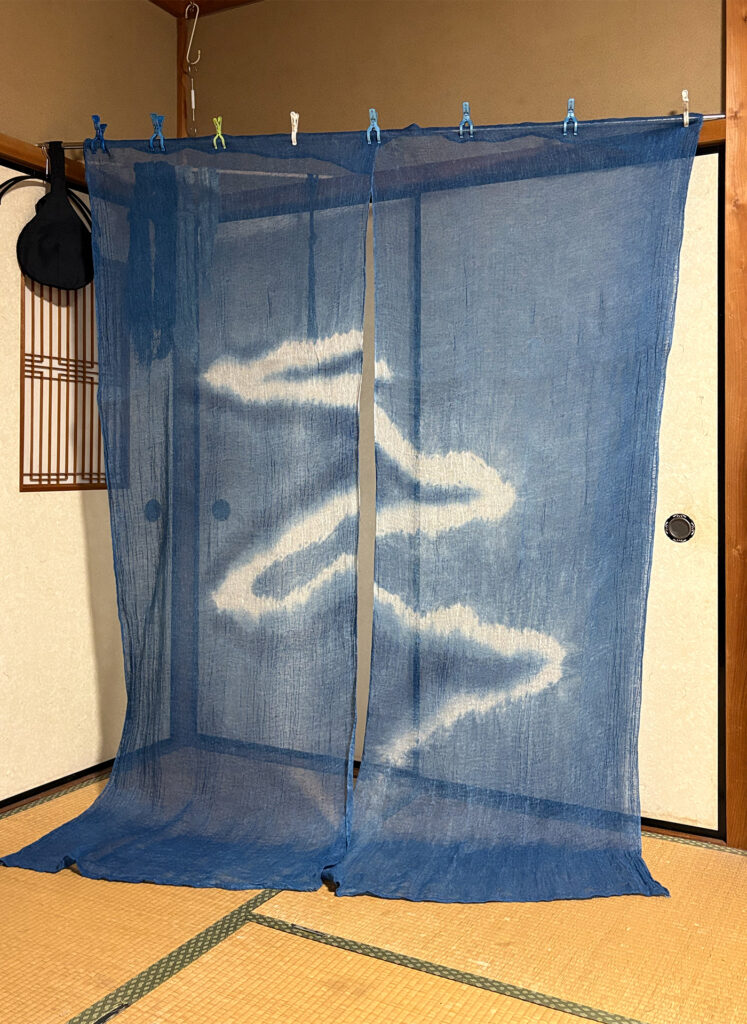
When the stitches were cut, and the cloth was unfolded, the work revealed itself.
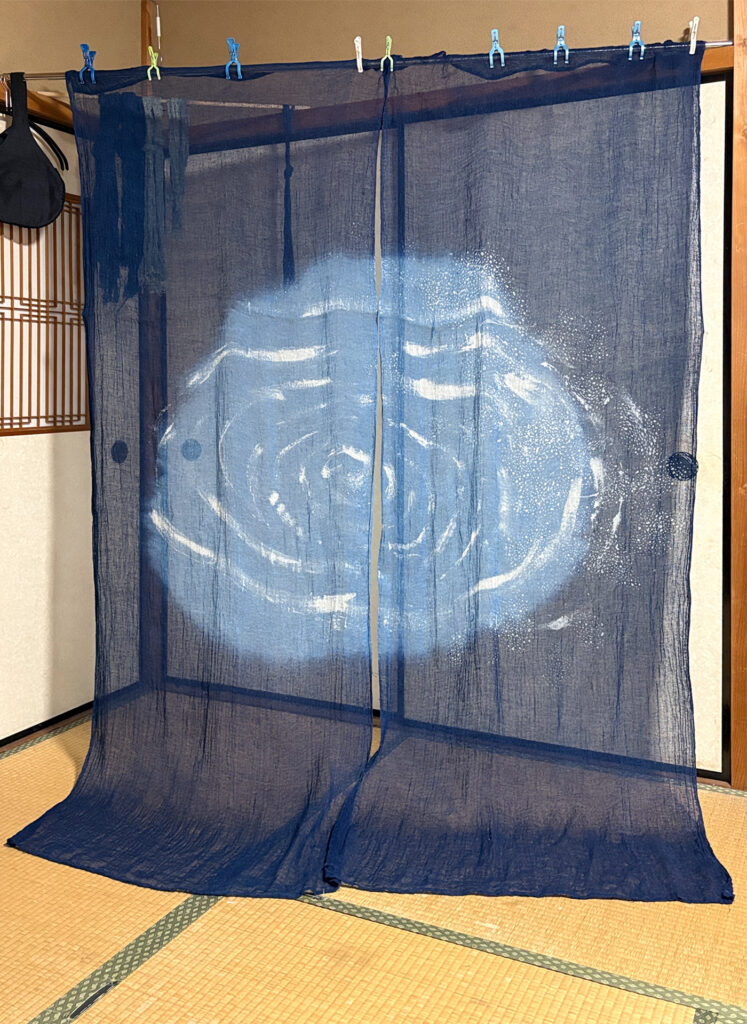
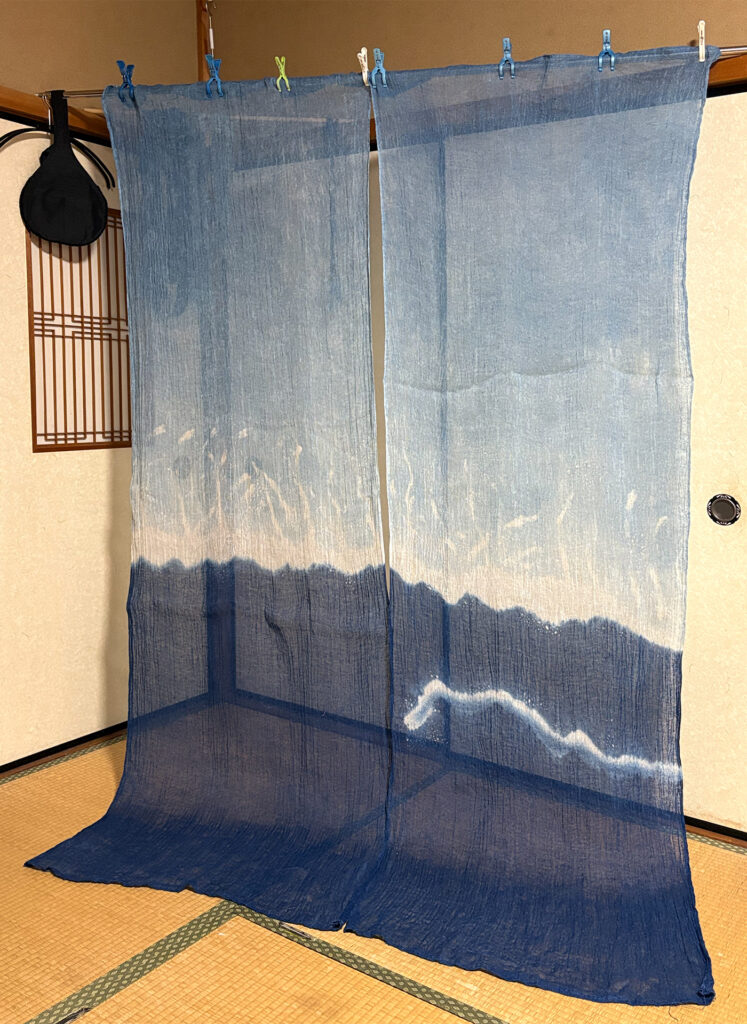
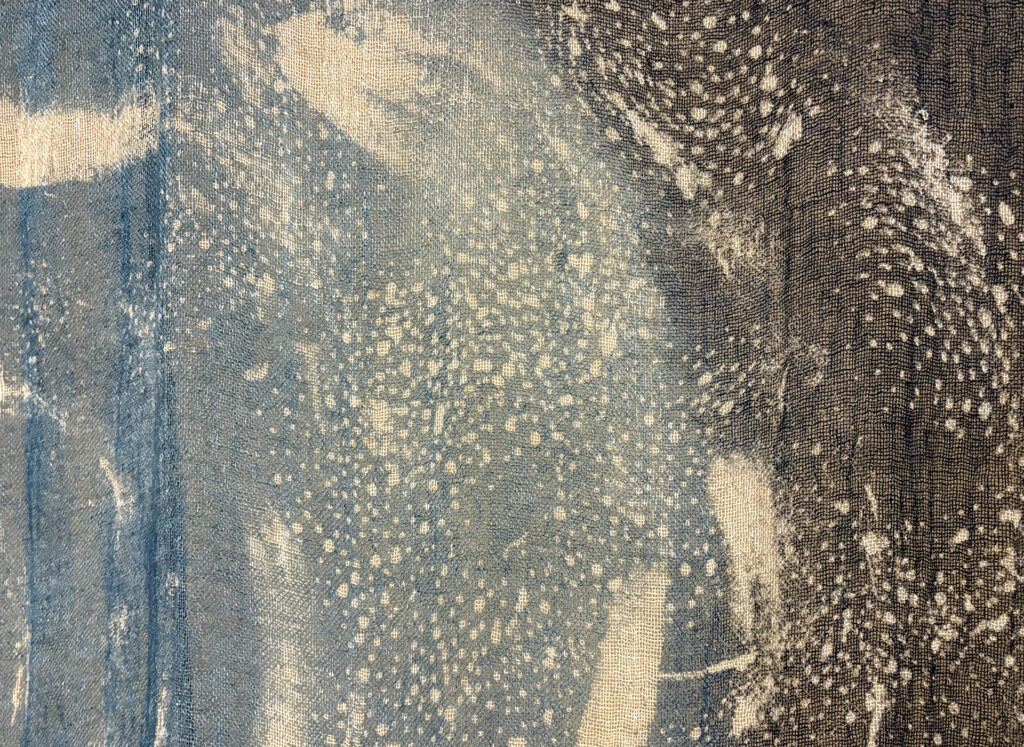
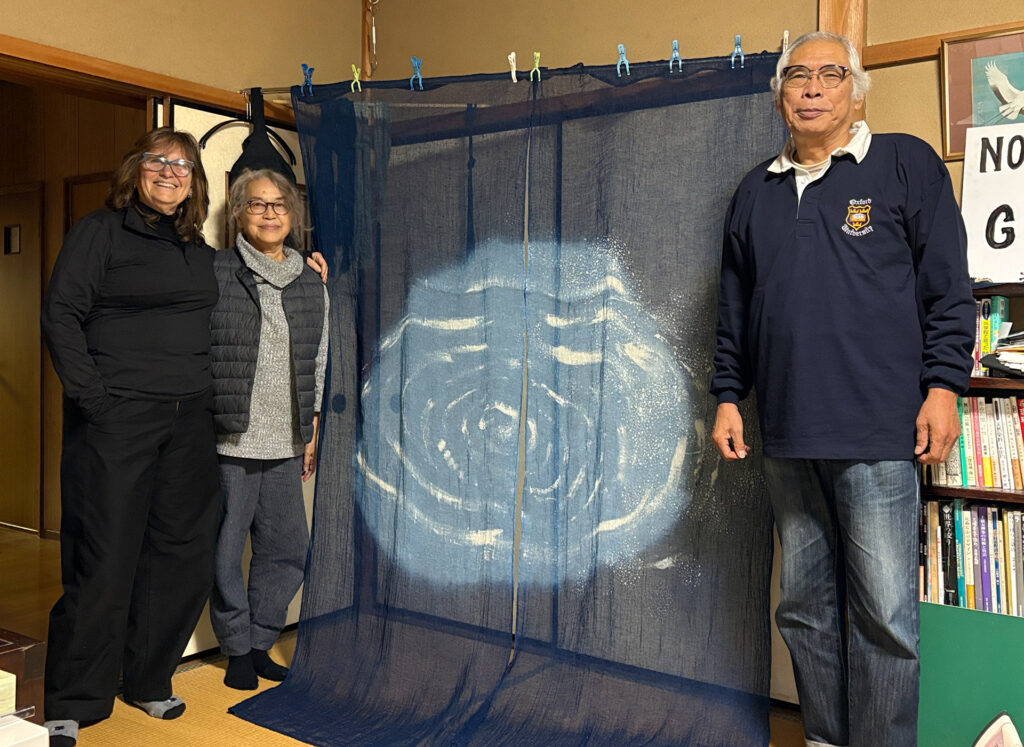
One piece shows a white line zigzagging across a field of blue, like a path through memory. Another moves from pale sky blue into deep indigo, like waves, or mountains at dusk. The third opens into a pale galaxy of whorls and scattered dots against the night-blue cloth.
Up close, the weave is visible, and so are the fine resist dots where indigo was held back. Each one is a small trace left behind.
Beyond Language
Marita and Yoko share no common language. They used a digital translator, and, more than that, the language of the hands: pointing, demonstrating, laughing, trying again. Over four days, the studio became a place of quiet trust.
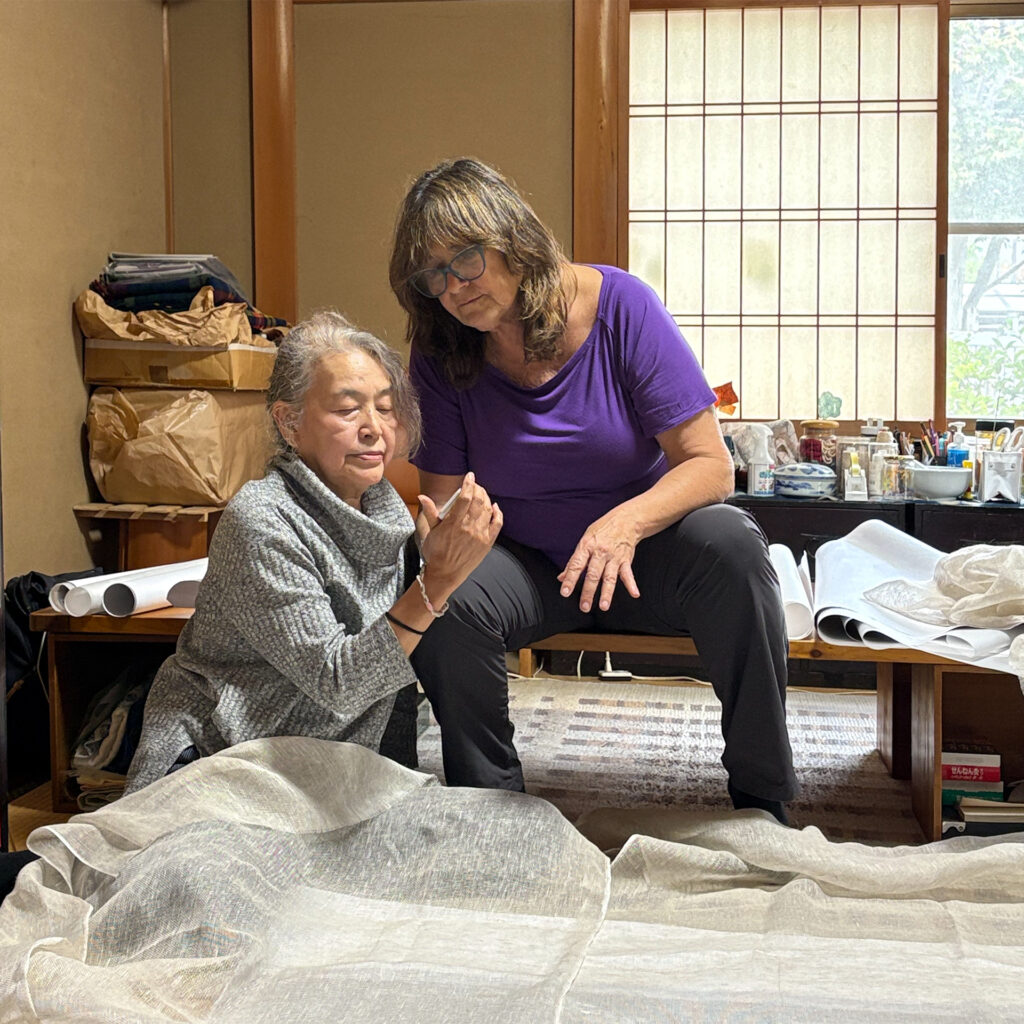
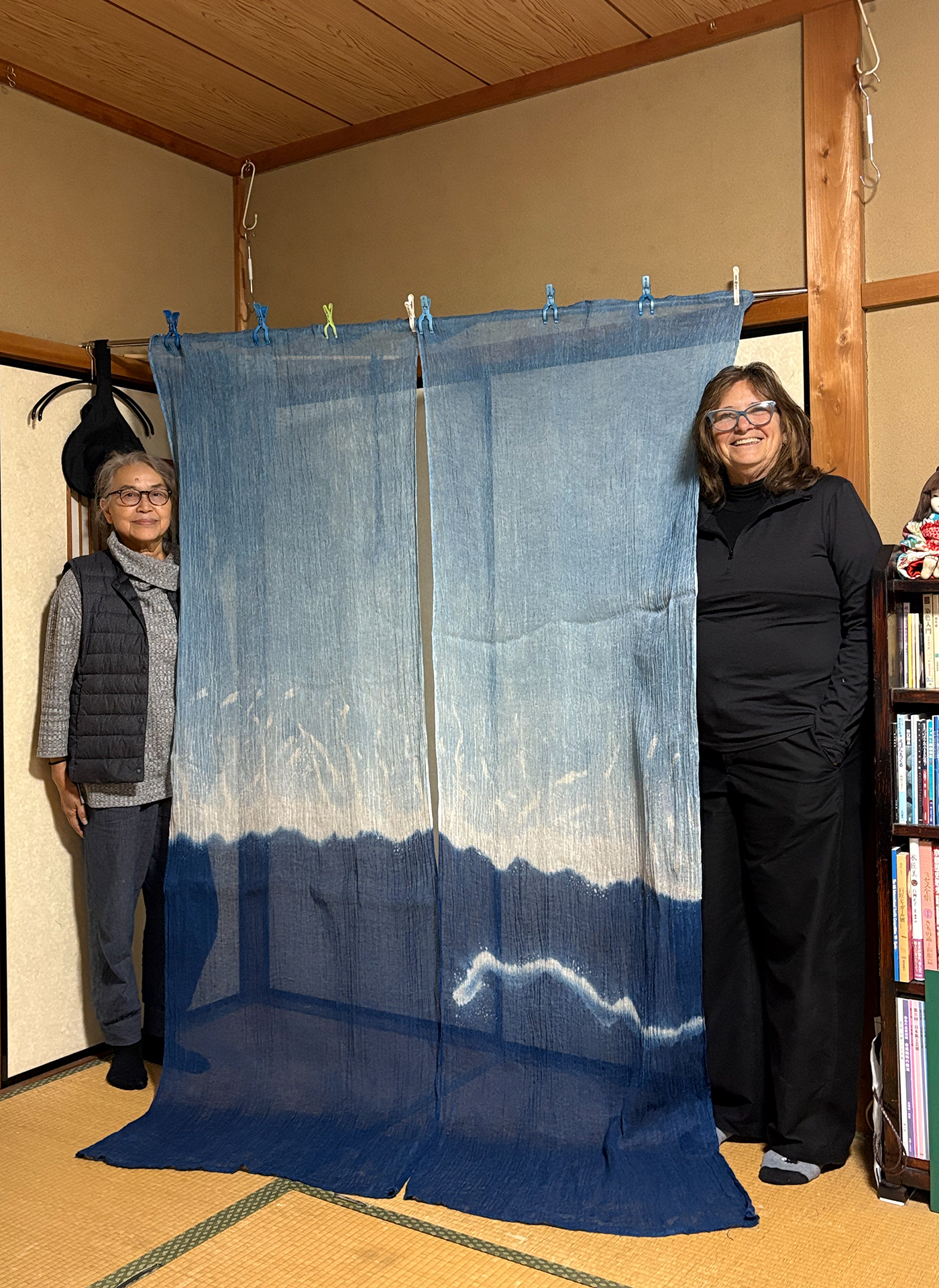
Yoko’s husband was part of that trust. He stayed by her side through all four days, from October 25 to 28, quietly supporting the work. By the end, Marita and Yoko were no longer teacher and visitor but friends, and the photographs from those days are full of warmth.
A Trace That Stays
Craft, at its best, carries what we cannot say. In Otsu, an Argentinian artist and a Japanese indigo master made that visible together, through silence that ended up as cloth.
At Kogei Art KYOTO, we connect artists worldwide with the artisans who keep Japan’s traditions alive. This collaboration reminded us why.
Takeshi Horio, Kogei Art KYOTO / Karafuneya Co., Ltd.