From Nature to Fabric: A Spiritual Journey
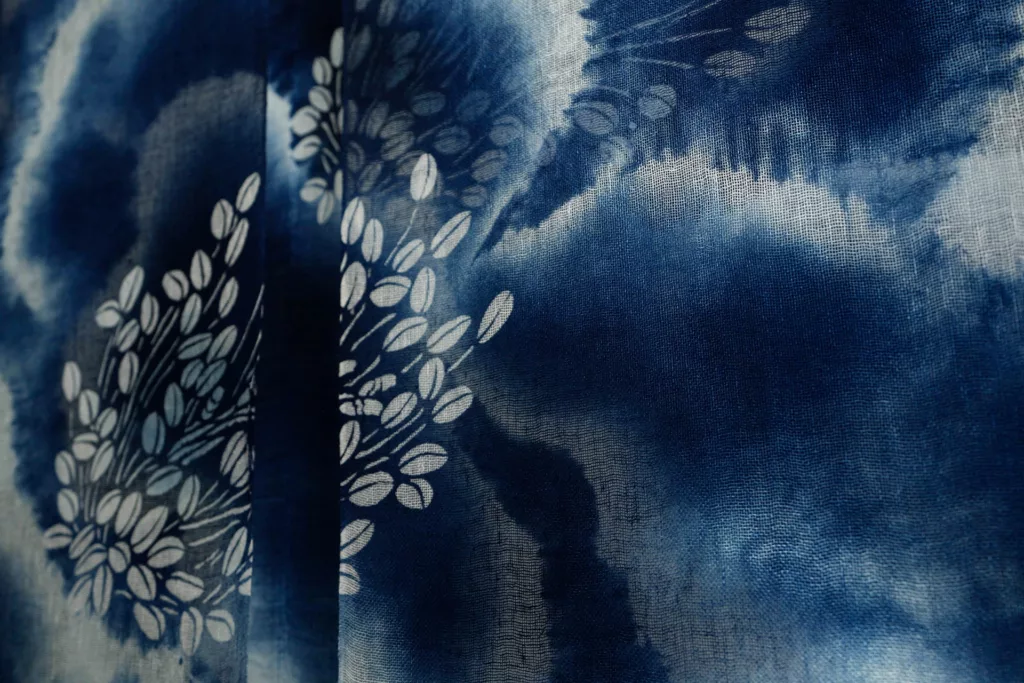
Japan’s culture, with its refinement and subtlety, captivates people worldwide. Among its most iconic exports is “Aizome,” or traditional indigo dyeing. Often hailed as “Japan Blue,” this technique is more than just a color; it is a manifestation of Japanese aesthetics and technical mastery.
At the heart of this tradition in Kyoto is artist Yoko Kamitani.
For Kamitani, indigo is not a mere pigment—it is a living entity. Her work represents a profound dialogue between human intuition and the rhythmic cycles of nature.
The Symphony of Fermentation: Listening to the Indigo
What sets Japanese indigo dyeing apart is the “Natural Lye Fermentation” method (Tennen-Aku-Hakko-Date). This rare, ancient technique uses only natural ingredients: indigo leaves (Sukumo), wood-ash lye, limestone, and wheat bran. It is a 100% chemical-free, circular process of life.
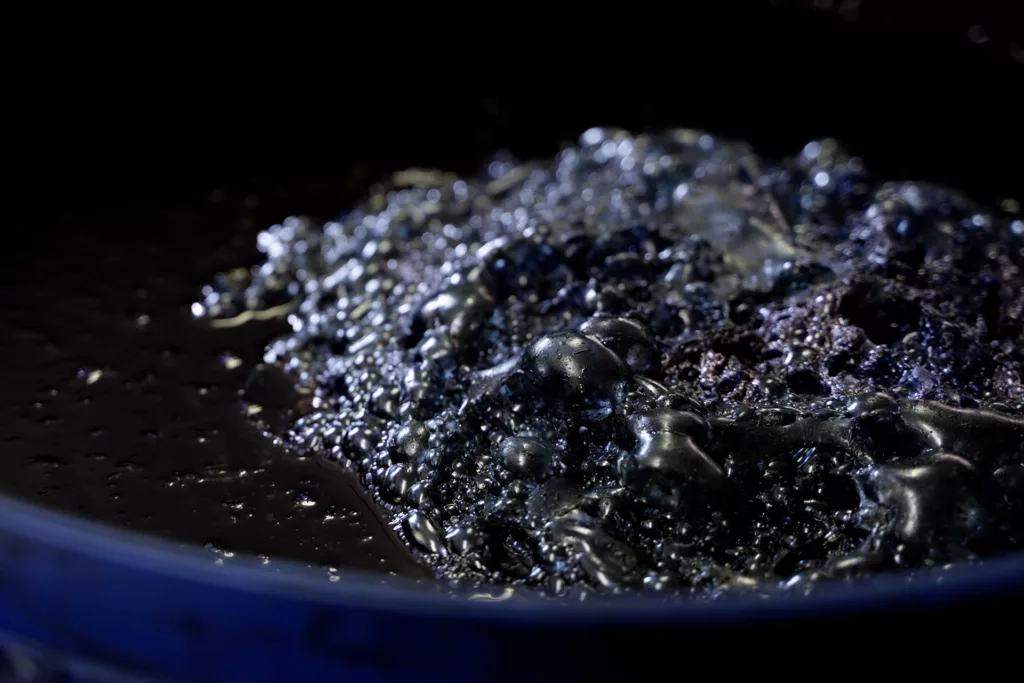
Kamitani famously monitors her fermentation vats not just by sight, but by listening. She leans in to hear the delicate sound of bubbles popping on the surface—the “voice” of the indigo. This sound indicates the peak vitality of the fermenting bacteria. In this moment, the artist’s soul synchronizes with the natural rhythm of life, determining the exact second the fabric should meet the dye.
The Meticulous Craft of “Sukumo”
The birth of Japan Blue is a test of patience that spans several months. It begins with the cultivation of Tade-ai (Japanese indigo), a plant uniquely suited to Japan’s climate. Once harvested, the leaves undergo a long fermentation to become Sukumo.
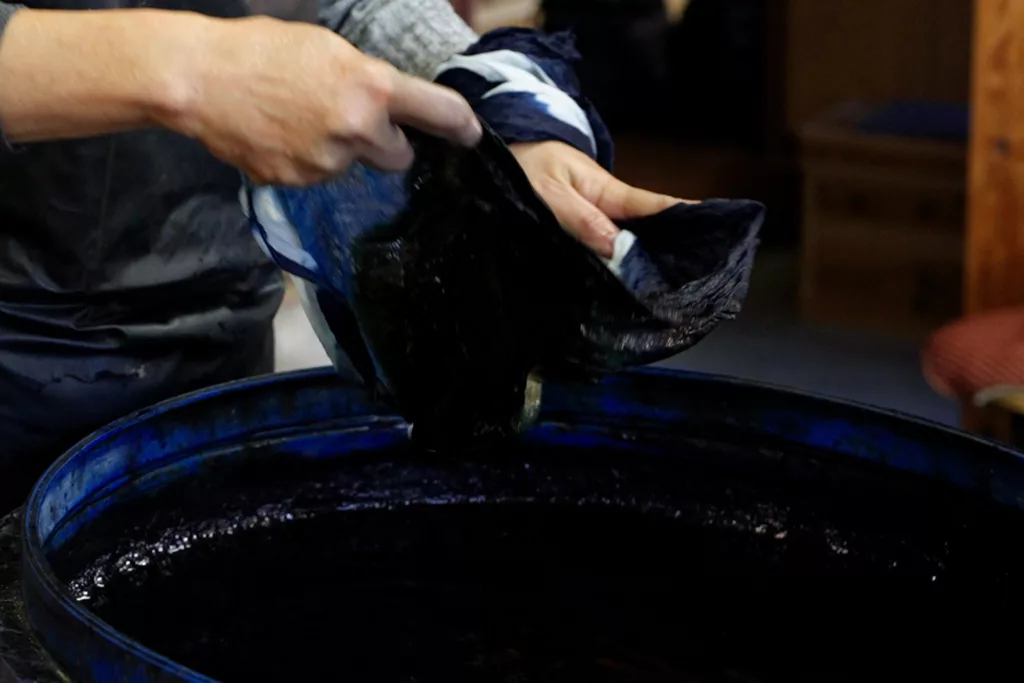
When fabric is first submerged in the vat, it emerges a yellowish-brown. It oxidizes only upon exposure to air, miraculously transforming into the deep, vibrant blue. By repeating this process dozens of times, Kamitani coaxes a multidimensional depth from the fibers—a blue that seems to shift and breathe under different lights.
A Sustainable Legacy: Why Japan Blue Endures
The global respect for “Japan Blue” stems from its meticulous process and its inherent harmony with the environment. Because Kamitani’s vats contain zero synthetic chemicals, the spent liquid can eventually be returned to the earth as nutrient-rich fertilizer.
Furthermore, natural indigo possesses medicinal properties—antibacterial and insect-repellent—offering a protective layer to the wearer. In an era of fast fashion and synthetic dyes, Kamitani’s work stands as a powerful antithesis: a sustainable art form that is vibrant, healthy, and eternal.
Japanese indigo dyeing, through the hands of masters like Yoko Kamitani, remains a captivating symbol of Japanese art—a bridge between the ancient wisdom of the earth and the modern quest for authentic beauty.
Other articles about Ms. Kamitani can be found here : Kogei Art KYOT0 Artists – Report on the Autumn 2024 Exhibition – PART 3
Would you like to explore the intricate world of Yoko Kamitani?
[View the Collection of Yoko Kamitani at KOGEI Art KYOTO]


*The article originally posted on August 23, 2023, has been revised.