A journey from Kyoto’s ceramic heritage to a wood-fired kiln 400 km away
When a lump of clay becomes a work of art, the decisive moment is firing. The kiln is not merely a tool — it is a collaborator, a transformer, and in the hands of the right artist, something close to an oracle.
In Kyoto, the ancient capital that has long been the heart of Japanese ceramic culture, three types of kilns define the modern landscape: electric kilns, gas kilns, and the far older, more demanding wood-fired kiln (maki-gama). Each produces a fundamentally different world.
The Three Paths of Fire
Electric kilns offer the gift of precision. Temperature is controlled with digital accuracy, and the results are consistent and predictable — ideal for artists who seek to realize a clear, pre-conceived vision. The pieces that emerge are refined and controlled, a testament to the artist’s design.
Gas kilns open the door to the atmosphere. By adjusting the oxygen balance inside the chamber, ceramicists can create oxidation and reduction environments that draw out rich, unpredictable color and texture from glazes. The work retains an element of surprise — and with it, life.
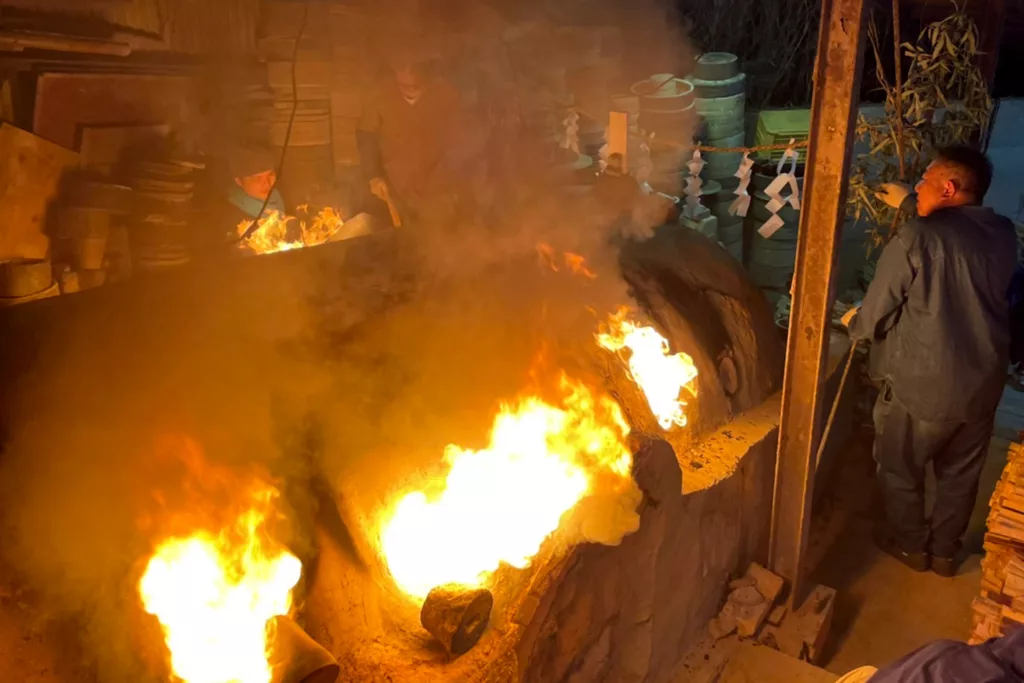
Wood-fired kilns — climbing kilns (nobori-gama), snake kilns, pit kilns — belong to an older covenant between maker and fire. Built on hillsides to draw flame upward through interconnected chambers, the climbing kiln can fire hundreds of pieces at once over multiple days. As heat flows from chamber to chamber and ash settles on the surfaces of raw clay, something irreproducible happens: depth, variation, a warmth that cannot be designed, only coaxed.
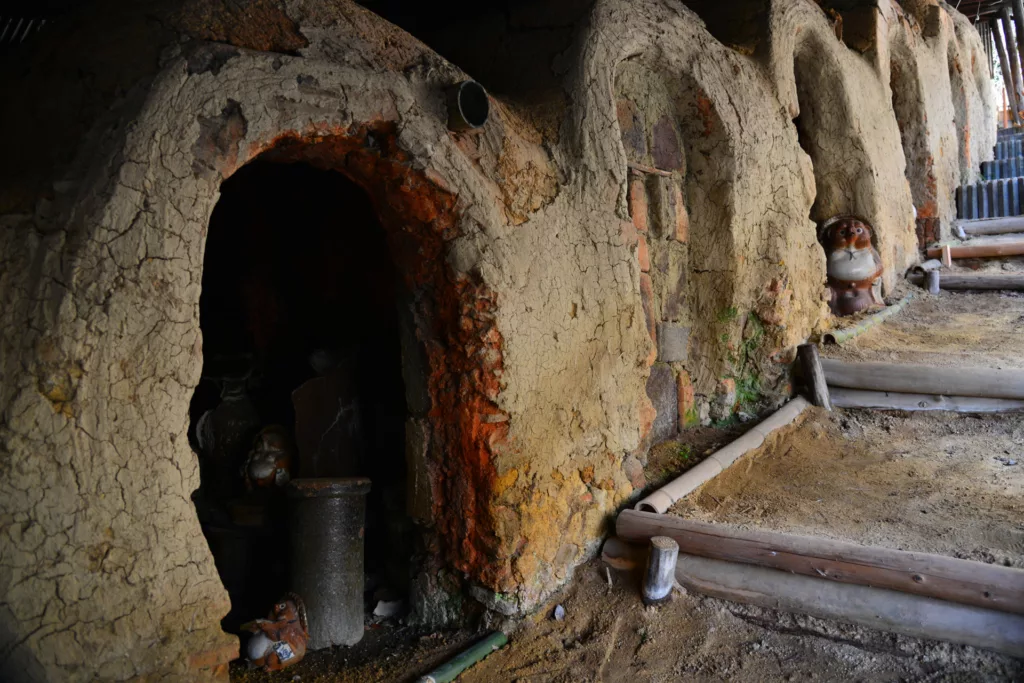
Kyoto’s urban regulations no longer permit the operation of climbing kilns within the city limits. Yet for some artists, no other path will do.
400 Kilometres for the Right Fire
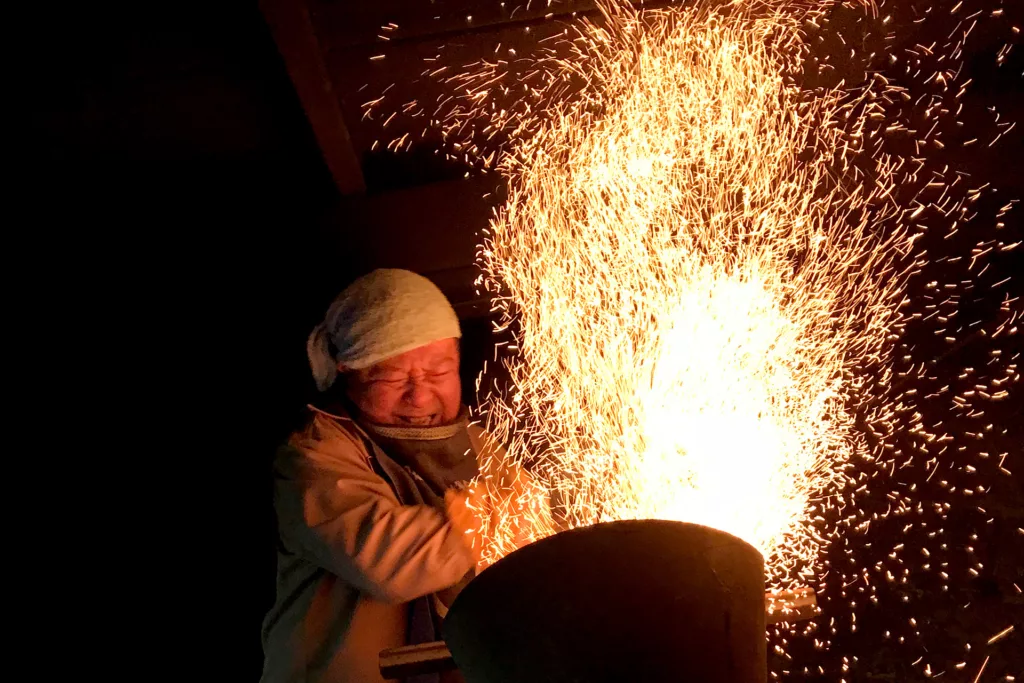
Makimasa Imai is one of those artists. Based in Kyoto, Imai travels 400 km to Takehara in Hiroshima Prefecture each time he fires his ceramics — because that is where his climbing kiln stands, and because for him, there is simply no substitute. “I always want to bring out the best qualities of the clay,” he says. “To do that, it’s best to fire the kiln with wood, which also creates variety in the feel of the clay.”

This is not nostalgia, and it is not stubbornness. It is a deeply considered artistic conviction. In Imai’s view, the electric or gas kiln — however practical, however precise — cannot fully awaken what lives inside the clay. Only the natural, living flame of wood can do that.
A Sculptor Who Speaks Through Clay
Imai’s background is unusual among ceramic artists. He trained not in ceramics but in sculpture at the Tokyo National University of Fine Arts and Music, graduating in 1986 and completing graduate studies in 1988. It is this foundation that gives his work its distinctive energy.
His subjects are animals — lions, horses, phoenixes, mythological guardians — rendered with a sense of tension and vitality that feels sculptural rather than decorative. His Guardian Lion Deity does not sit peacefully; it presides. His Phoenix Incense Burner does not merely suggest a bird; it seems about to take flight. The clay itself, fired in the climbing kiln’s uneven heat, carries a roughness, a depth of surface, that amplifies this feeling of life.
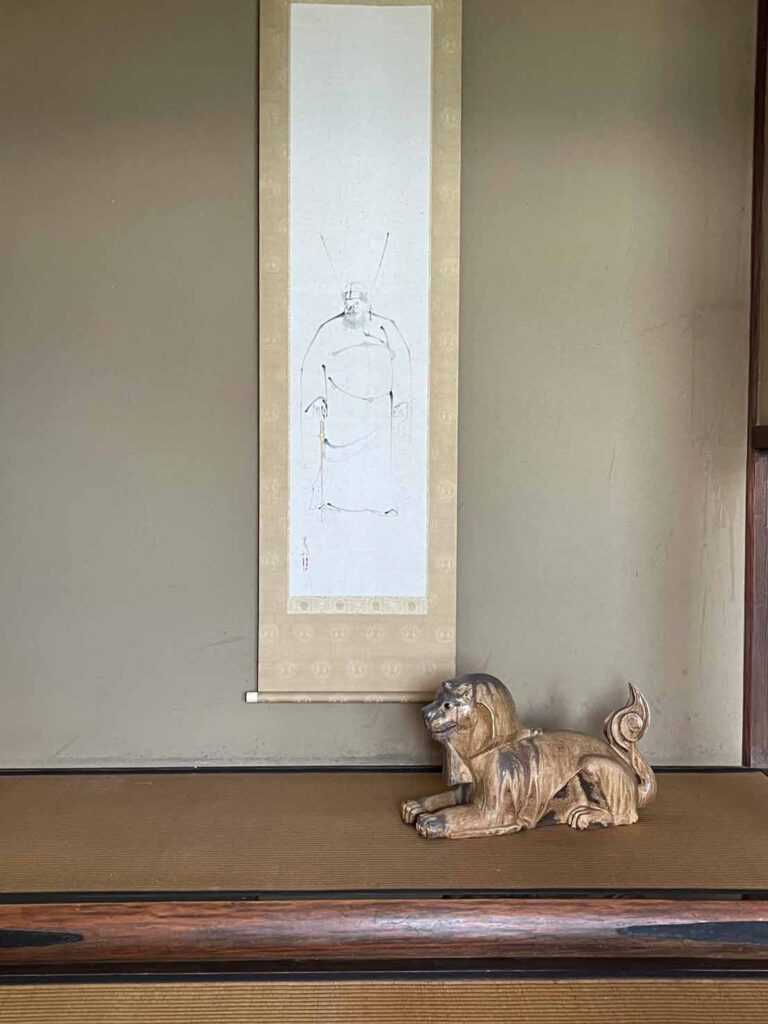
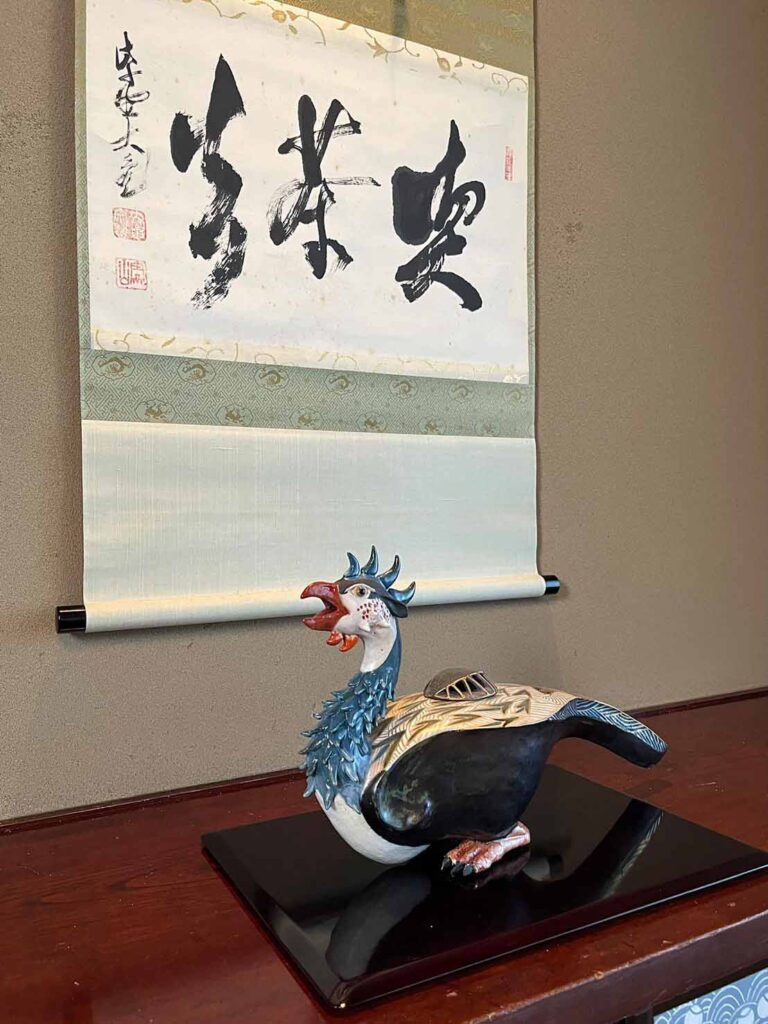
This is what wood firing gives: not uniformity, but individuality. Every piece that emerges from a climbing kiln is shaped in part by the fire itself — by the direction of the flame on a particular day, the ash that settles on a particular surface, the subtle shift in temperature between one chamber and the next. No two pieces are ever quite the same.
Art That Greets You in the Morning
Despite the monumental scale of some of his public works — monuments stand in front of railway stations, at Tokyo Racecourse, in museums in China and Japan — Imai’s philosophy is quietly intimate.
“I want to make pieces that have the warm feeling of waking up in the morning and having someone greet you with ‘Good morning,'” he says. “I want to make pieces that add something to a space that will brighten the lives of people using that space.”

This is, perhaps, the deepest ambition of kogei: not to impress, but to accompany. To be present in the rhythms of daily life. The climbing kiln, with all its difficulty and its distance, is in service of this warmth — because it is only through genuine effort, through real fire and real risk, that an object can carry real feeling.
A Living Lineage
Imai comes from a family of ceramicists. His father, Masayuki Imai, is a recipient of Japan’s Order of Cultural Merit1 — one of the nation’s highest honors in the arts. To carry that name and that tradition forward is itself a kind of responsibility.
But Makimasa Imai is not simply preserving a tradition. He is testing it against contemporary standards — exhibiting at the Carrousel du Louvre in Paris, the Hetjens Museum in Düsseldorf (where his work recently graced the cover of the museum’s journal), and at major institutions across China, Vietnam, and beyond. His climbing kiln, his 400 km journeys, his animal sculptures alive with wood-fired warmth — these are not relics of the past. They are a declaration that the ancient methods still have something to say.
Makimasa Imai’s works are available through Kogei Art KYOTO. To explore his collection, visit the artist page.
- Order of Cultural Merit: https://en.wikipedia.org/wiki/Order_of_Culture ↩︎