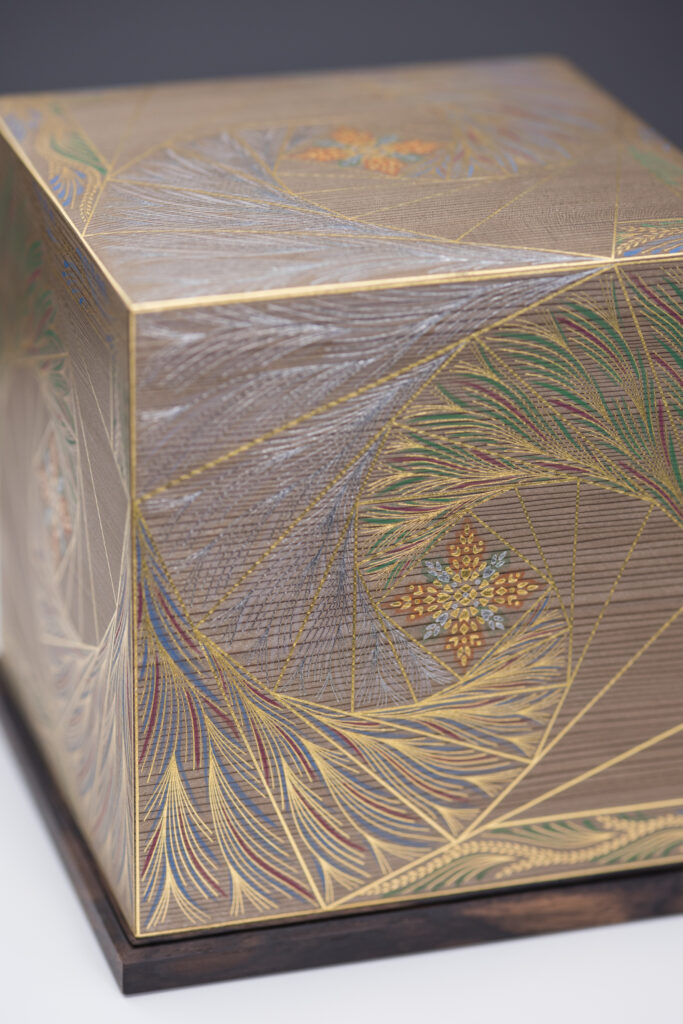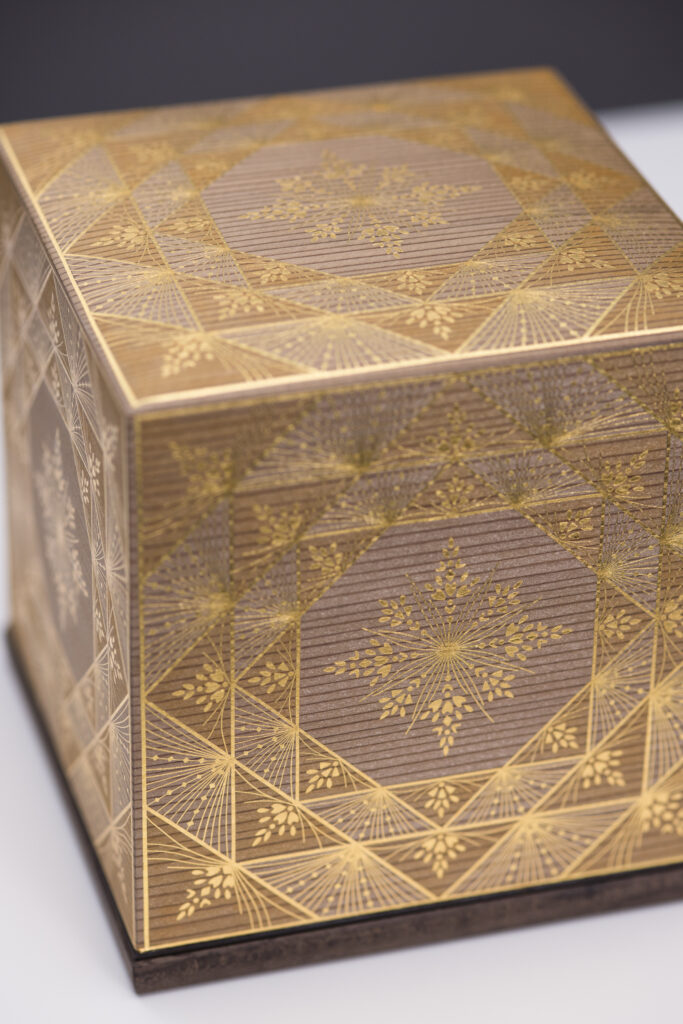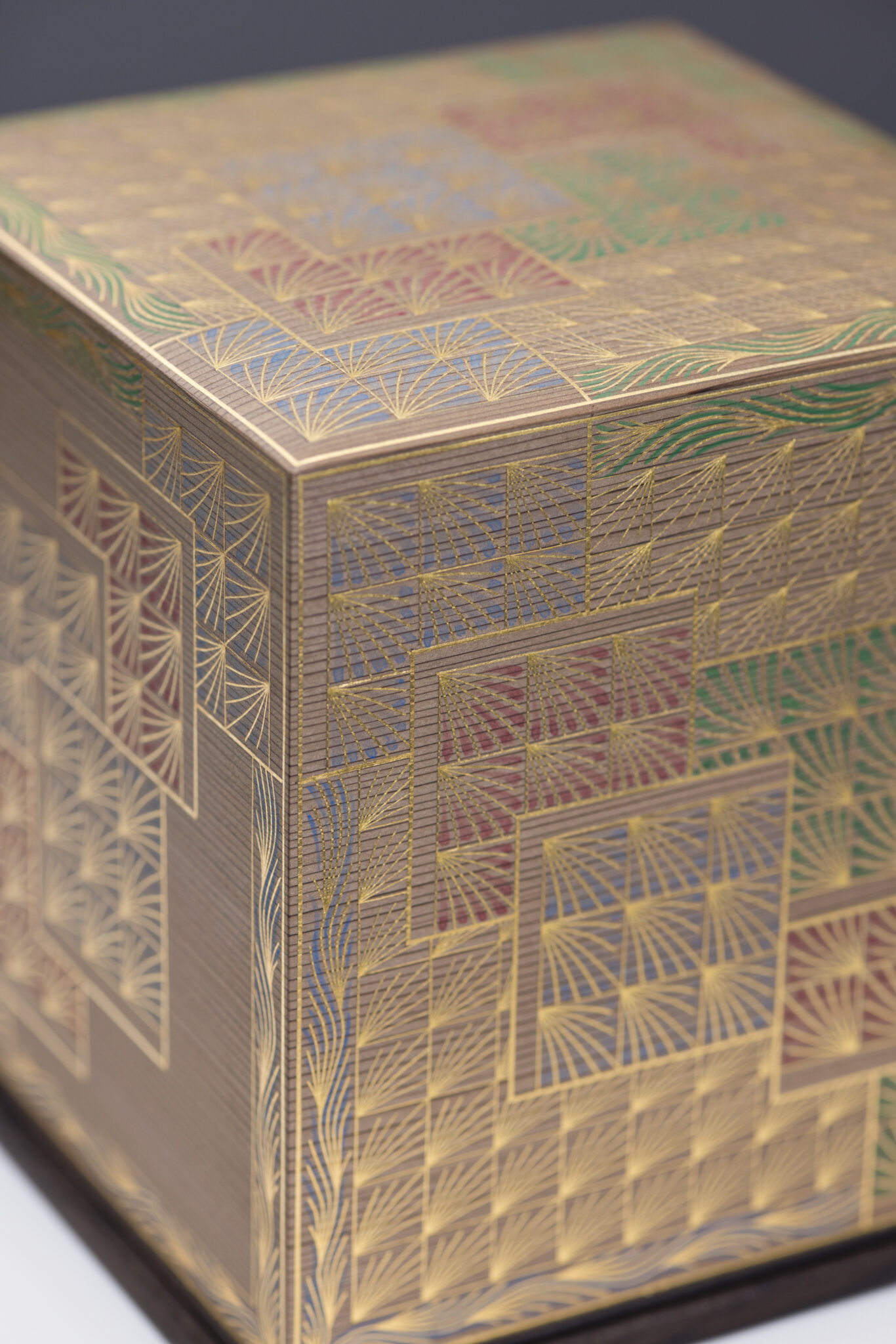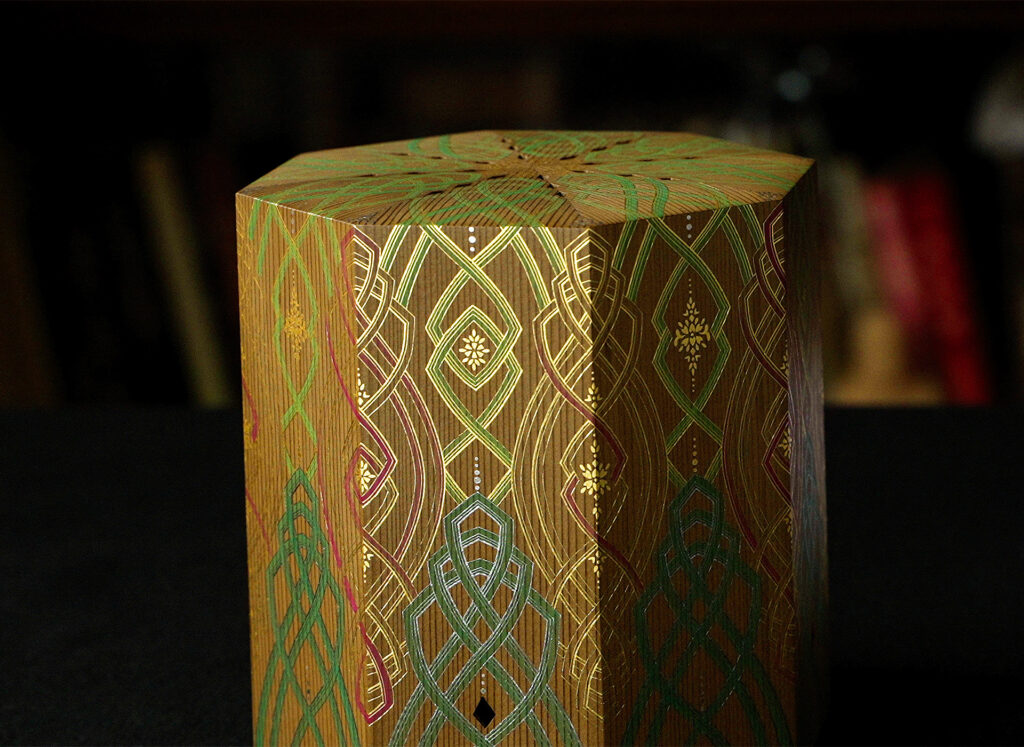
In the profound silence of a Kyoto atelier, a breathtakingly delicate ritual unfolds. Strips of gold leaf, cut finer than a strand of hair, are meticulously applied to the surface of Jindai-Sugi—ancient cedar that has slumbered beneath the earth for thousands of years—creating ethereal geometries of light.
The artistry of Kirikane master Ai Imamura is born from a unique communion between handmade bamboo tools and materials gifted by time itself. In this feature, we go beyond the shimmering surface to explore the “invisible stories” of devotion, precision, and the extraordinary elemental bond that defines her masterpieces.
The Material: A Miracle of 2,000 Years
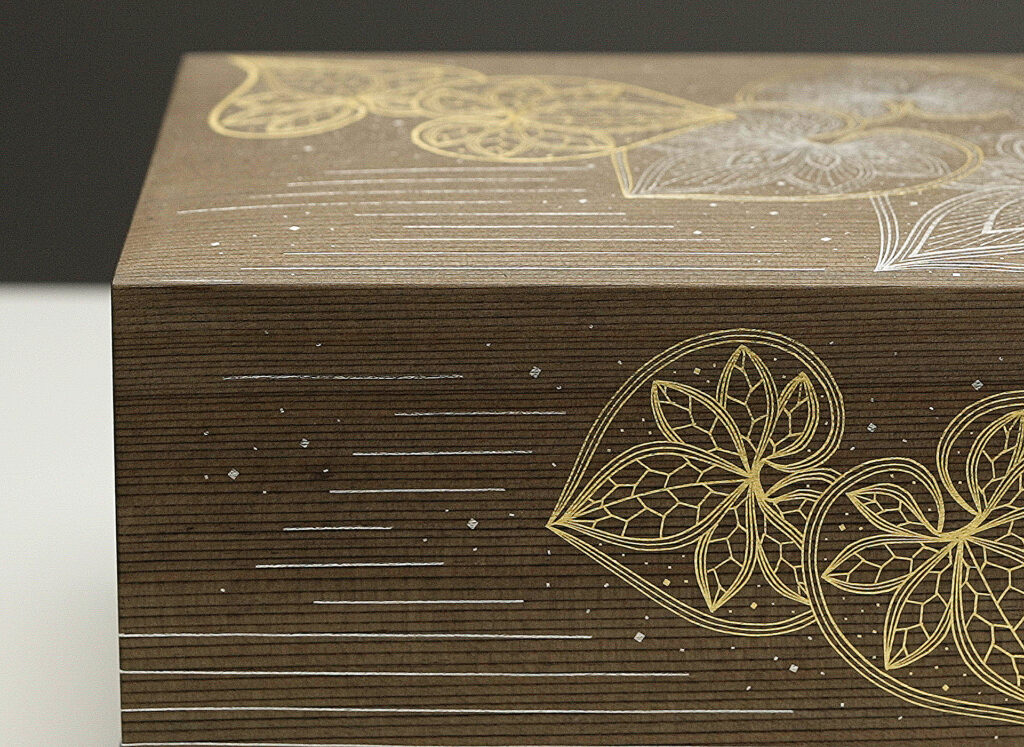
At the heart of Imamura’s work lies a material known as Jindai-Sugi (Ancient Cedar). Buried by volcanic eruptions thousands of years ago and preserved in the oxygen-free earth, this wood possesses a hauntingly beautiful, silver-grey hue—a color that no living tree can replicate.
By layering pure gold and platinum onto this “silent wood,” Imamura creates a resonance between the Earth’s memories and the meticulous touch of human hands, bridging a gap of over two millennia.
The Tool: The Precision of Bamboo
Perhaps the most surprising aspect of the Kirikane technique is the tool itself. To cut the gold leaf, Imamura does not use steel. Because gold leaf would cling to a metal blade, the artist crafts her own knives from bamboo.
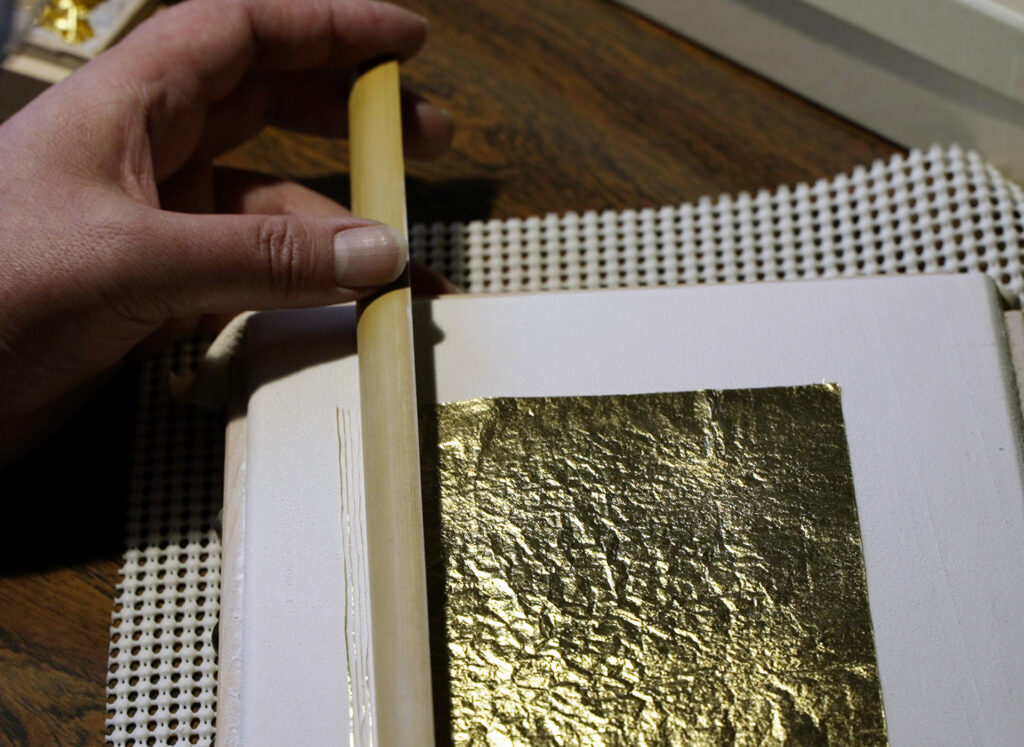
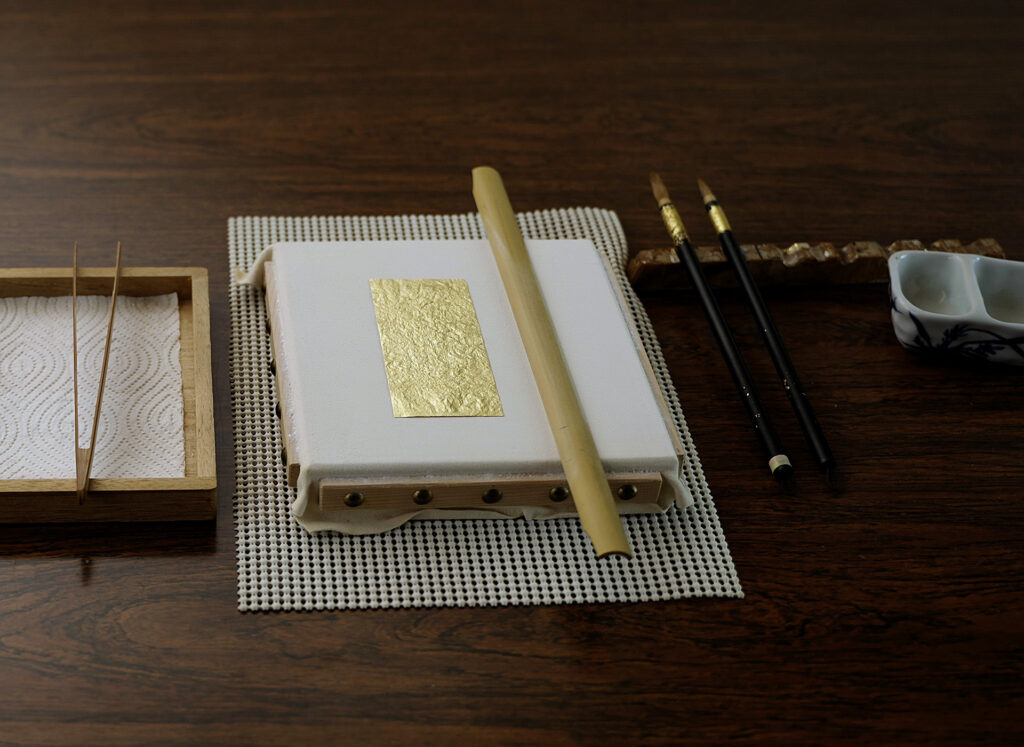
It is a poetic irony: nature (bamboo) is required to master metal (gold). Shaved to a microscopic sharpness and balanced to the artist’s hand, these bamboo knives are truly an extension of her soul, allowing for precision that no factory-made tool could ever achieve.
Conclusion: Becoming a Patron of Heritage
Acquiring a piece by Ai Imamura is more than just owning a decorative object. It is an act of becoming a patron of a vanishing heritage—supporting the preservation of rare natural materials and the mastery of ancient tools.
The brilliance found in her work is not just the sheen of gold; it is the condensed essence of time, patience, and the unwavering dialogue between the artist and her craft.
A Bridge to the Future: Evolving Tradition
Originally introduced to Japan in the 6th century alongside Buddhism, Kirikane was developed as a sacred technique to adorn Buddhist statues and paintings. However, in the hands of Ai Imamura, this ancient craft has been masterfully sublimated into the realm of contemporary art.

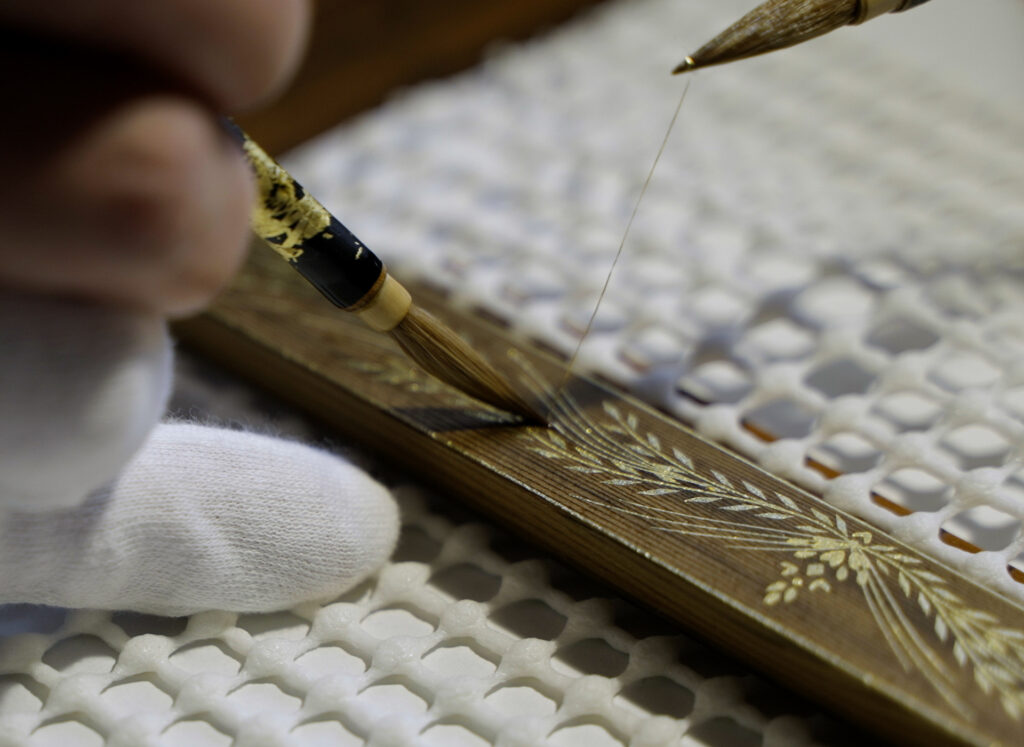
What makes Imamura’s work exceptional is her bold integration of platinum leaf alongside traditional gold, creating geometric, modern patterns that resonate with a global aesthetic. By weaving together Jindai-Sugi (a material with millennia of history), Kirikane (a thousand-year-old technique), and a contemporary design sensibility, she transforms Kirikane from a mere “ornament” into a piece of modern art that commands the space it inhabits.
“Tradition is something that stays alive by evolving.” Imamura’s work is a testament to this philosophy, taking the baton passed down from the distant past and carrying it firmly into the future.
Learn More About Kirikane Heritage
If you wish to discover the spiritual roots and history of Kirikane, which date back to the 6th century, please visit our Introductory Guide to Kirikane.
Would you like to explore the intricate world of Ai Imamura?
[View the Collection of Ai Imamura at KOGEI Art KYOTO]